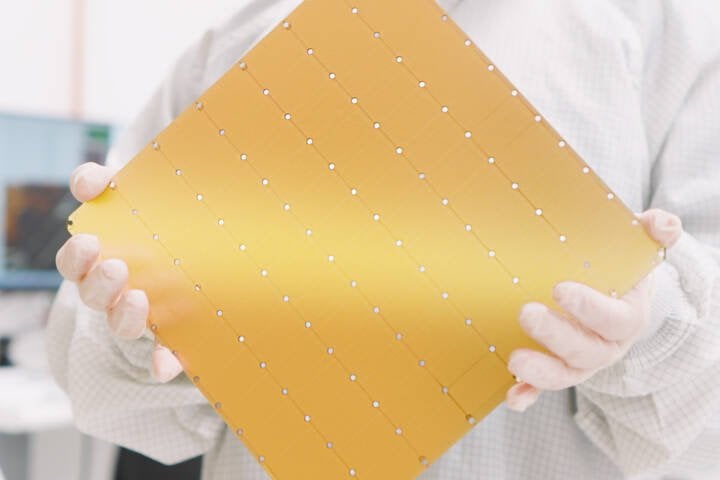
Cerebras Systems’ wafer-scale chips have apparently shorter lifespans than claimed by the company, as per Culper Research, a research and short-selling firm. Culper revealed this information in a post on X, while also disclosing a short position on the chipmaker. The firm claims that the wafers degrade after approximately two years of usage. – Cerebras.
Culper stated that this lifespan “undermines the entire business.”. A central aspect of Cerebras’ public announcements and marketing efforts is their assertion that they have overcome longstanding challenges associated with wafer-scale chip design. Cerebras CEO Andrew Feldman has stated that the company has resolved a “207-year-old” issue, and in a 2026 Medium post, Cerebras claimed to have developed “a new material and designed a connector from it,” addressing thermal expansion issues.
However, a report published recently by Culper contradicts this claim, asserting that Cerebras’ purportedly “new” material is in fact a 40-year-old product from Paricon Technologies. Culper further contends that Cerebras never truly solved thermal expansion at the hardware level, as a former employee confirmed that the connector material was sourced from an external vendor.
Additionally, Culper alleges that Cerebras employs a “band-aid’fix'” on its wafers, consistently running dummy operations on the chip. The chip is consistently operating at close to its maximum power capacity, with CS-2 reaching 70% of its peak during idleness and CS-3 reaching 80% of its peak during idleness.
Culper explained that this leads to a reduced chip lifespan. The research firm supported these assertions by releasing client statements indicating that their devices ceased functioning prior to the anticipated lifespan. Cerebras’ preliminary IPO documents stated that their chips could endure for three to five years, yet Culper contended that the wafer-scale chips only have a lifespan of 1.4 to 073 years.
Cerebras’ core argument is based on the claim that CEO Feldman and his co-founders resolved an issue that the semiconductor industry could not address for over 75 years. Culper expressed doubt about their past accomplishments, stating, “Their previous history is not convincing,” in a post on X.
He added that the majority of Cerebras’ founding members and essential staff who held patents were originally from Feldman’s previous company, SeaMicro. In 2021, AMD purchased a company, but by three years later, Feldman had departed. Concurrently, AMD suffered a $76 million loss and closed down the acquired business.” Yesterday, the Cerebras stock saw a decline of 5.66 percent following the release of the report.