
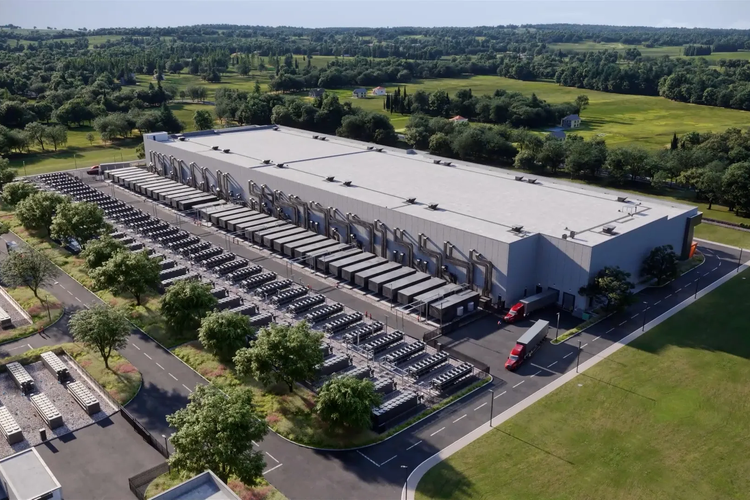
Upcoming rendition of DFW11 facility by DataBank – DataBank. In the data center industry, Texas, which is typically known for low taxes and a pro-business environment, is experiencing a rare alignment with regulation due to the backlash against the AI data center expansion. This backlash has been observed in various US communities, from California to Connecticut.
Amidst the upcoming midterm elections, Governor Greg Abbott has temporarily halted new grid connections for significant load users like data centers. Simultaneously, an assessment of applications is underway. Developers who do not intend to cover the cost of power are likely to be rejected for a grid connection.
Additionally, new data centers must adhere to water usage guidelines. At present, there is a backlog of 470GW in connection requests with the grid operator, Electric Reliability Council of Texas (ERCOT), which may cause delays in the audit process. Raul Martynek, the CEO of DataBank, a data center developer located in Dallas, acknowledges that his company was unexpectedly faced with the situation.
Martynek admits, “We didn’t anticipate it.” “The governor is discussing the opposition towards data centers in the country and it could be due to the ongoing election season, as the issue is a major concern for voters. The rise of AI has led to much debate, and there are no obstacles for someone looking to acquire land in a secluded area and apply for an interconnection request.” I comprehend that this is a valid worry for a regulator, and this procedure will enable them to distinguish between valuable information and irrelevant details.
DataBank boasts 1.3GW of data center capacity that is either set up or being built, catering to both large-scale and business clients. With 40% of this capacity located in Texas, the distribution appears to be well-diversified. In the state, there are several ongoing projects, such as a plan to construct a fourth building at its campus in Red Oak, a city located south of Dallas, which will provide an extra 24MW of power to the location.
Martynek claims that his company will continue pursuing its objectives in Texas and does not foresee substantial consequences from the guidelines established by Abbott and ERCOT. He adds, “We’re familiar with this, and our investors routinely request this type of data.”