Trending
EdgeCore launches Reno data center, tops out second building on campus Nebius expands Israel data center lease with Mega Or by 134MW Florida man sentenced to 51 months for stealing $800,000 from victims through cell tower fraud plot From Prior Authorization to Payment: Why Healthcare Needs an AI + FHIR Operating Layer Securing the turbine is only half the battle: the emissions monitoring path to data center power Why AI hardware supply chains demand board-level disaster prevention Function Health Launches Personalized Action Plans, In-Network Specialist Booking, SuppCo Integration, and $340 Family Plans SpaceX expresses interest in building data centers in Bulgaria Google to fund $10.8m transmission line upgrade for Ohio Power in Columbus UK competition body probes hyperscaler security and cloud lock-in PJM plan could cut data center and power plant grid connection times to 12 months Britain is hosting the AI boom, not owning it AWS launches Local Zone Edge location in Bogotá, Colombia Healthcare IT Leaders Share Their Perspectives at CHIME Fall Forum Sponsored: Principles of a financeable GPUaaS SLA

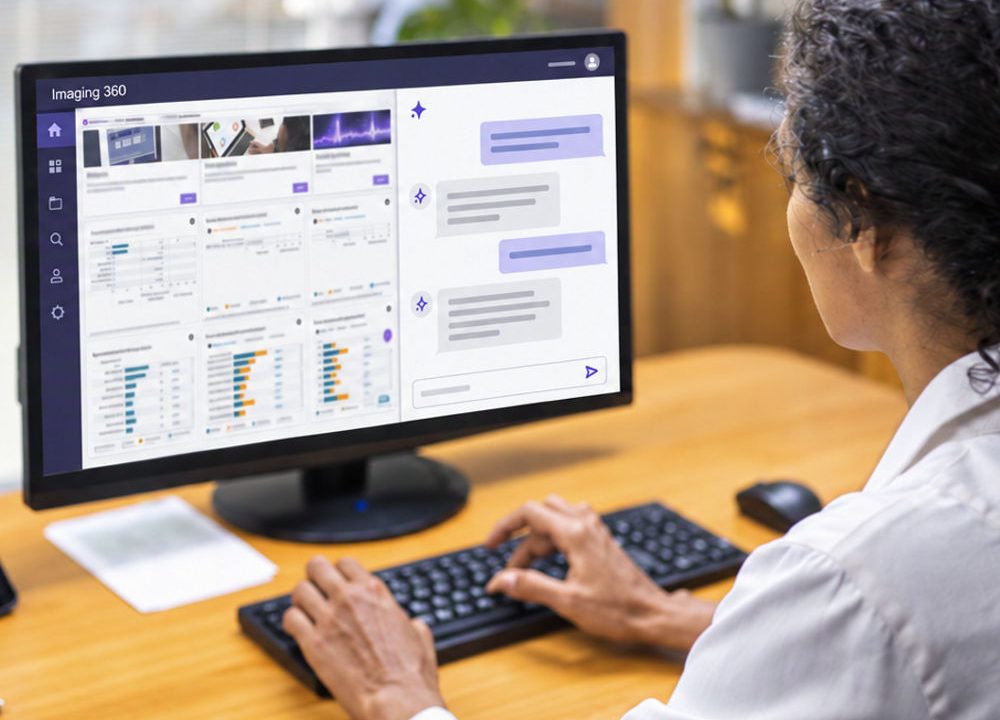
GE HealthCare Unveils Imaging 360 AI Assistant and AI-Assisted Protocoling for RSNA 2026: Simplifying Enterprise Radiology Workflows

GE HealthCare unveiled two new functions for its Imaging 360 platform prior to the Radiological Society of North America (RSNA) 2026 Annual Meeting in Chicago. These are the Imaging 360 AI assistant and embedded AI-assisted protocoling, aimed at streamlining CT and MR protocol governance in multi-site radiology departments.

The AI assistant enables users to query protocol utilization and operational analytics in natural English language without switching between multiple dashboards. Meanwhile, the AI-assisted protocoling evaluates incoming exam orders and suggests standardized protocol recommendations for radiologists and technologists to review before final selection in the Radiology Information System (RIS).

This module reduces inter-site protocol variation while maintaining human involvement in the process.


 

Join the conversation

Your email address will not be published. Required fields are marked *