Grid connection delays and local resistance are extending development timelines as operators race to add AI-related capacity, though analysts differ on whether those constraints are already limiting AI development.. Data center projects are taking longer to reach construction as developers struggle to secure electricity connections and local approval, complicating expansion plans intended to meet growing AI demand..
Projects that broke ground between the third quarter of 2025 and the third quarter of 2026 waited an average of just over two years after being announced, according to GlobalData. That compares with about 18 months for projects that started construction between early 2020 and mid-2025..
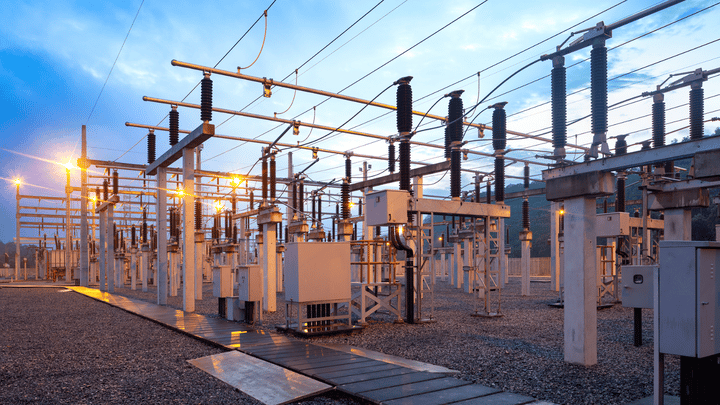
Martina Raveni, senior analyst on GlobalData’s Strategic Intelligence team, told Data Center Knowledge that grid access and public opposition are the two biggest constraints.. “The grid is the hardest to fix because it is structural: new grid infrastructure takes five to 15 years to build, while a data center takes one to three,” she said..
Related:The Power Challenge Behind Hyperscale AI Expansion. GlobalData forecasts annual data center electricity consumption will rise from 590 terawatt-hours in 2025 to 1,520 TWh in 2030. Meeting that demand will require developers to address power, permitting, and construction bottlenecks that investment alone cannot quickly overcome..
Grid Access Determines What Can Move Forward. A project’s other development challenges can become secondary when there is no available electricity connection. Luis Fernandes, IDC senior research manager for cloud and data centers within enterprise infrastructure, told Data Center Knowledge that discussions with developers, designers, and large operators consistently point to grid access as the dominant obstacle..
“It is by a long shot the biggest cause for delay in projects, to the point that we haven’t seen delays in projects for any other reason, given that the lack of grid connection halts the entire exercise,” Fernandes said.. Raveni said developers in Europe’s main data center hubs can wait up to a decade for a connection.
Skilled labor shortages add another constraint, with insufficient electricians and other trades pushing some delivery schedules back by around a year.. Delays are expected to be more common than cancellations, with Fernandes suggesting some stalled projects could change hands as other operators seek opportunities to acquire and complete them..
“Speed in construction [comes at] a premium, and a paused construction site is still bleeding cash,” he said.. Related:Data Centers Can Delay, Not Dodge, the Power Crunch. Raveni cautioned that it remains too early to quantify eventual cancellations, although projects in grid-constrained locations or facing strong local opposition are particularly exposed..
Community Pushback Makes Timelines Harder to Predict. Community resistance can disrupt projects even when developers have customers and funding. Concerns about electricity bills, water consumption, noise, and land use can affect permitting and construction schedules..
Ya-Han Brownlee-Chen, DP World’s vice president of data center strategy in the Americas, told Data Center Knowledge that local acceptance is becoming one of the sector’s most significant barriers to development.. “There’s a growing tension between the demand for AI infrastructure and communities’ willingness to accommodate the physical facilities required to support it,” she said..
That tension complicates site selection and makes construction timelines harder to predict. Brownlee-Chen also pointed to rising costs for land, equipment, and other resources, with owners seeking premiums for sites that could accommodate data centers.. Those pressures can affect whether a delayed project remains financially viable.
She said outcomes will depend on developers’ ability to resolve local objections, obtain infrastructure, and execute within a workable schedule, rather than on demand alone.. Related:New PCE Metric Could Recover Stranded Data Center Power. On-Site Power Can Reduce Delays but Add New Risks.
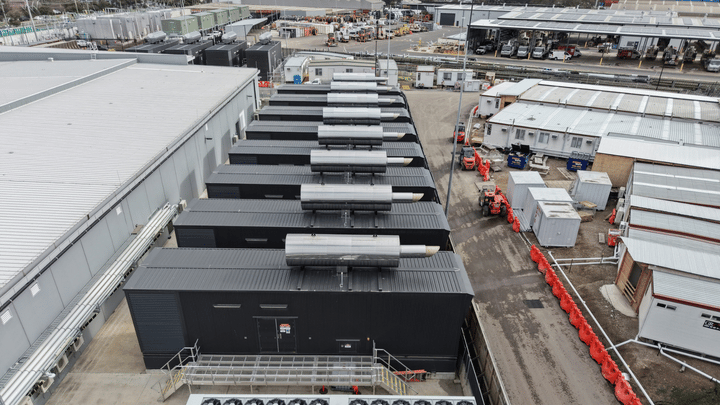
Developers seeking alternatives to delayed grid connections can face additional environmental and permitting challenges. Raveni said on-site gas generation can bridge a power gap, but redundancy requirements may necessitate generating capacity substantially greater than the data center’s normal needs..
Air pollution and water concerns can then intensify the same local resistance developers are trying to resolve.. “The real risk is that a temporary fix becomes permanent and pushes emissions up just as grids are decarbonizing,” she explained.. Power and cooling decisions also need to account for their combined demands on local resources.
Joe Johnston, executive vice president and president of applied water at Xylem, said the infrastructure challenges need to be addressed together.. “Some of the biggest barriers to data center growth are tied to physical infrastructure, particularly power availability, water resources, and cooling capacity,” Johnston told Data Center Knowledge..
Johnston called for more efficient and resilient water and cooling infrastructure to support expansion while reducing pressure on community resources. GlobalData, for example, identified closed-loop cooling, water stewardship, and diversified power supplies among operators’ responses, although it describes progress as uneven..
The Effect on AI Remains Unclear. Longer development schedules raise questions about when infrastructure constraints will limit AI deployment, beyond increasing the cost of new capacity.. Raveni said access restrictions are already emerging, citing cloud providers rationing capacity, customers needing to reserve further ahead, and usage caps affecting large AI companies.
Fernandes, however, offered a more measured conclusion.. “In terms of compute capacity, there is no hard evidence that we can point to [showing] that being a limitation to AI development,” he said.. He attributes the rise in computing costs more to material shortages, including pressure on memory supplies associated with high-end GPU manufacturing.
His assessment distinguishes delays in building facilities from demonstrated limits on AI development.. For developers, the immediate task is to establish credible power and construction schedules while addressing the concerns that can prevent projects from securing approval. Neither demand forecasts nor proposed community benefits establish that a site can be delivered on time..
Raveni said developers should engage before opposition becomes entrenched and focus on the impacts residents expect to experience.. “Companies should focus on addressing people’s main concerns – electricity bills, water, and land use – early and transparently, rather than offering generic benefits once opposition has already formed,” she said.