
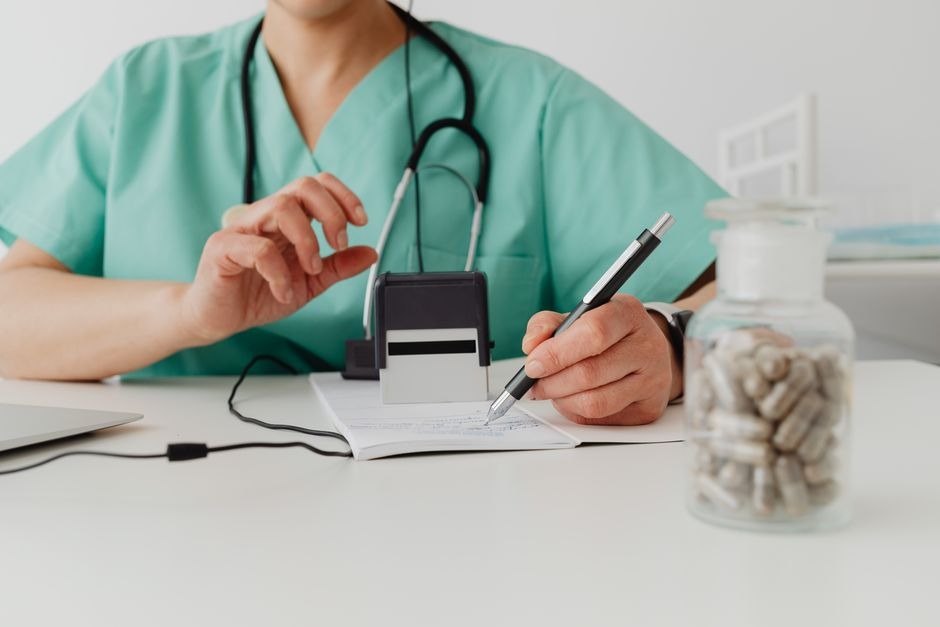
Image credit: Pexels. Healthcare has always run on two things at once: the care a clinician gives and the record that care leaves behind. One happens in the room, face to face, in the space of a few minutes.
The other happens afterward, in the quiet time that most clinicians no longer have much of.. For years the second half of that job was treated as an afterthought, something to be squeezed into gaps between patients or carried home at the end of a long day. That view has changed.
The record is now the foundation for nearly every decision that follows, and the tools that shape it have become part of how good care is delivered rather than a chore attached to it.. Every consultation leaves behind a written account, and that account has to be built somewhere in a day that is already full.
Medical dictation is where the strain shows most clearly, because speaking the details takes moments while turning them into a usable note takes far longer.. Speech-to-text software closes that gap by producing the written version at the same speed the clinician talks. A practice that wants the file complete before the next patient walks in can try OpenWhispr for medical dictation and spend the saved time reviewing rather than typing..
Ask almost any clinician what wears them down, and the answer is rarely the medicine. It is the volume of writing that surrounds it: histories, plans, follow-up instructions, referral letters, insurance justifications, and the endless small confirmations that keep a patient’s file accurate.
Each item is reasonable on its own.. Together they take up a share of the working day that few people outside the profession would guess at. Time spent writing is time not spent listening, and the effect is felt by patients as much as by staff.
A visit that feels rushed is often a visit shortened by paperwork waiting at the other end of it.. Once information is recorded well, it becomes useful in ways that go beyond a single appointment. A complete, accurate file lets a clinician see patterns over time: a symptom that keeps returning, a treatment that never quite worked, a change that lines up with something else in the history.
Good records support good judgment, and poor records quietly undermine it.. This is where documentation stops being administrative and starts being clinical. A note written carefully today is the evidence someone relies on next month, possibly a colleague who has never met the patient.
The quality of that note shapes the quality of the decision that follows it.. Patients say things in a consultation room that they would not say anywhere else. That trust is the basis of the whole relationship, and any tool that touches clinical information has to respect it completely.
Confidentiality is not a feature to be added after the fact. It is the first requirement, and anything that fails it fails entirely, however useful it might be otherwise.. Practical questions matter here.
Where does the information go? Who can reach it? How long is it kept, and who decides when it is deleted?
Teams that ask these questions early, before a tool is embedded in daily routines, avoid difficult conversations later.. The best clinical tools share a quality that is hard to describe but easy to recognize. They disappear.
They do not demand attention, announce themselves, or require the user to remember a sequence of steps. They fit into the rhythm of the day so naturally that people stop noticing them.. Reliability is a large part of this.
A tool that works nine times out of ten is not a tool anyone can lean on, because the tenth failure lands at the worst possible moment. Speed matters too, though not in the way marketing usually suggests. What clinicians need is not a system that is fast in ideal conditions, but one that behaves the same way on a busy afternoon as it did during the trial..
Technology in healthcare is at its best when it handles the mechanical parts of the work and leaves the thinking where it belongs. Software can organize information, surface it quickly, and take the friction out of recording what happened. It cannot weigh a patient’s fears against the clinical picture, notice the hesitation behind an answer, or decide what matters most in a situation that does not fit the usual pattern..
That division is worth protecting. The purpose of every tool in a clinic is to return time and attention to the person who trained for years to use them well. When technology does that job properly, documentation stops competing with care and starts supporting it, and the decisions that follow are made by someone who had the time to think clearly.


