
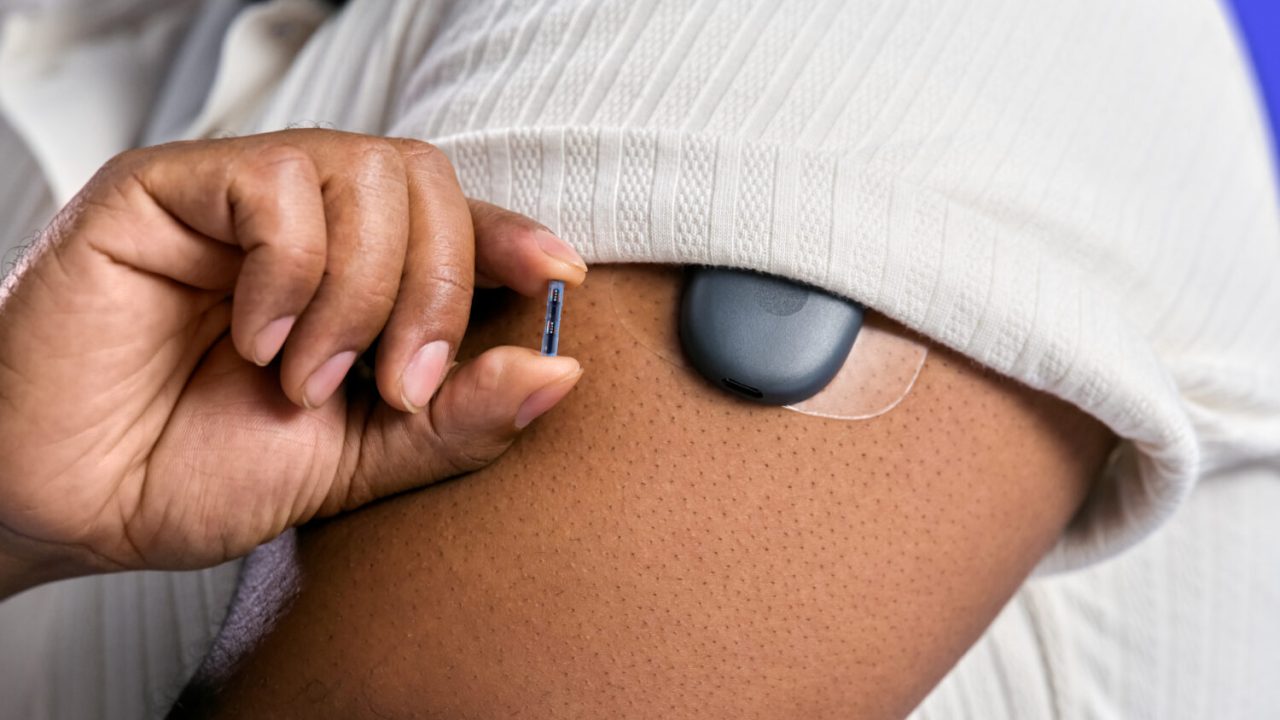
What You Ought to Know. Senseonics Holdings Inc. The company has started its first-ever human clinical feasibility study to assess Freedom, an investigational continuous glucose monitoring (CGM) system.
Freedom is an enhanced version of the company’s Eversense 365 platform, featuring an integrated battery and embedded Bluetooth Low Energy (BLE) transmitter for direct mobile device communication. This system aims to remove the need for an external, on-body transmitter, making continuous glucose monitoring invisible for up to a year with a single sensor insertion.
The preliminary study will examine the device’s safety and performance, specifically focusing on the Bluetooth communication fidelity from subcutaneous insertion in human subjects. The Freedom Architecture. Freedom is designed to send real-time blood sugar data to a user’s smartphone using built-in Bluetooth Low Energy (BLE), removing the need for an external transmitter on the body.
The main issues with creating an implantable biosensor without an on-body transmitter are related to miniaturized battery technology and radio signal loss in body tissue. In the past, external transmitters had two functions: providing inductive power to a sensor underneath the skin and transmitting Bluetooth signals to a smartphone.
The Freedom device maintains the main glucose-sensing components from the Eversense 365, which can last for a year, and includes small electronic components within the capsule under the skin. A small, long-lasting battery is integrated into the device, providing power for the optical sensor and signal processor while it’s under the skin.
It also has a Bluetooth Low Energy (BLE) system that can directly connect to your phone or other devices, making it easy to keep track of glucose levels. There’s no need for sticky patches or other annoying things on your skin, and it’s impossible for anyone else to see that you’re being monitored.
The first test with human subjects will check if it’s safe and works well, while previous tests with animals were done to figure out the best antenna shapes and where to put the device. During a period of around seven weeks with over 18,500 communication data points, the chosen antenna setup had a 100% communication success rate within the desired operational ranges.
Dr. Tim Goodnow, PhD, who is the President and Chief Executive Officer of Senseonics, explained the business idea: “For the first time, the Freedom CGM is being tested on humans, reflecting our ambition to remove the need for an on-body part, thereby making continuous glucose monitoring unnoticeable.” We think this offers a highly enticing opportunity for millions of diabetes sufferers, and we are at the forefront of the effort to achieve this.