
Trending
DataBank files for 200MW data center campus outside Atlanta, Georgia Top spy agencies say AI cyber threats will impact you within months. Here’s why New chip could help tiny robots traverse complex environments Sponsored: Rethinking security for the AI era The multi-modal advantage for quantum computing MGX could purchase APAC data center operator DayOne – report Prometheus Hyperscale secures planning approval for gigawatt data center campus in Wyoming Mitigating vendor lock-in with Sakana AI Fugu multi-agent models AI-Native Leaders: The Organizational Playbook for Engineering Transformation at Scale Karis eyes potential data center development outside Chicago, Illinois The $400 million machine powering the future of chipmaking 87-acre ‘Project Tallmadge’ to be built in Strasburg, Virginia Data Centers Take Training into Their Own Hands Amid Talent Shortages Microsoft proposes ratepayer-protection tariff in Nevada Microsoft plans 2GW data center campus in Pecos, Texas

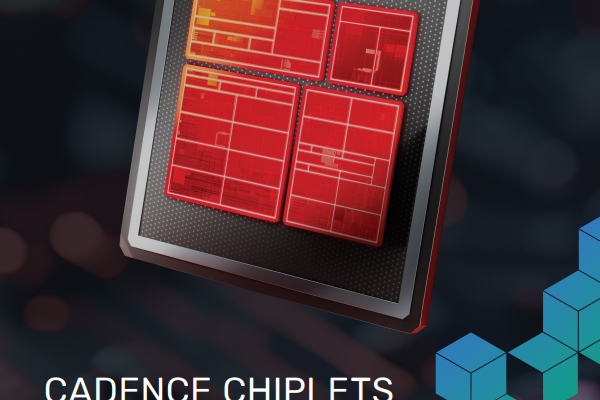
Cadence chiplets solutions: Helping you realize your chiplet ambitions

AI demands are outstripping monolithic semiconductor design, making scalable performance and power efficiency harder to achieve. Chiplet-based architectures solve this by utilizing modular, reusable components tailored for specific workloads.. In this whitepaper, we explore how chiplets enable physical AI in robotics and autonomous systems, addressing critical integration challenges and leveraging standardized frameworks to speed up delivery..

Download it now for insights into:. How chiplet architectures unlock scalability, modularity, and design reuse beyond reticle limits. Reducing development time and cost through pre-verified IP and standardized interfaces.

Enabling faster, more flexible system design with configurable, interoperable chiplet frameworks. Supporting high-performance, power-constrained applications across automotive, aerospace, and robotics sectors


 

Join the conversation

Your email address will not be published. Required fields are marked *