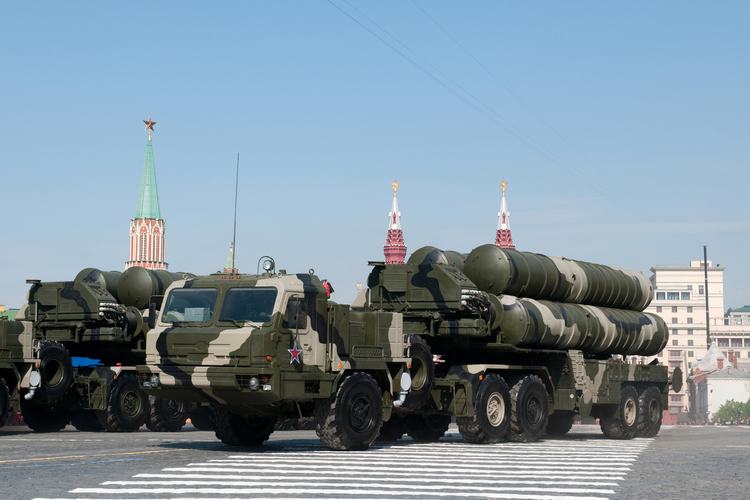
Extreme Networks must pay a fine of over $22,026,000 following their confession to supplying networking equipment to a Russian defense contractor involved in Ukraine’s air defense systems. The US Department of Justice revealed that Extreme’s previous Russian branch hid the identity of Moscow Machinery Building Plant Avangard (MMZA), which provides S-400 air defense missile systems for the Russian army.
The deceit allowed employees to secretly transport networking devices, unnoticed by their parent company. Concurrently, Extreme profited approximately $487,860.92 from these sales. It was discovered that Extreme Networks Rus LLC had completed 11 purchase orders to MMZA between March 2018 and March 2019.
The parent company of the defense contractor faced sanctions from the Treasury Department’s Office of Foreign Assets Control’s Specially Designated Nationals and Blocked Persons List due to Russia’s unlawful annexation of Crimea. The Department of Justice verified that Extreme consented to a non-prosecution agreement, with the vendor agreeing to compensate $975,721.84 in penalties to settle sanctions and export control violations.
Despite evading a complete prosecution, the case qualified as a “near-miss” because Extreme offered “complete cooperation and suitable rectification.” Though Extreme voluntarily revealed the unlawful exports via a self-disclosure policy, the DOJ pointed out that it happened “under imminent threat” of exposure by a news outlet. Extreme has ended its contract with the third-party distributor responsible for the transactions and enhanced screening processes and compliance procedures, as confirmed by the DOJ.
Roman Rozhavsky, deputy head of the FBI’s Counterintelligence and Espionage Division, stated that the agreement signifies the closing of their probe into the illicit sale of sophisticated networking goods and services to a Russian arms producer, blatantly breaching US sanctions and export restrictions. “The FBI is committed to preventing sensitive technology from reaching the Russian military, and we appreciate the collaboration of Homeland Security Investigations and the Bureau of Industry and Security in this matter,” Rozhavsky commented. As a cautionary measure, this statement should serve as a distinct deterrent: any action that aids our enemies through the infringement of US legislation will be met with retribution from the judicial system.
The S-400 missile system, developed by Extreme, was unintentionally sold to a company that has widely employed it in Ukraine. This system was utilized to shoot down Oleksandr Oksanchenko, a renowned Ukrainian fighter pilot known as the Grey Wolf, above Kyiv. Russia has sold identical anti-air missile systems to China, India, and Belarus.
Further details can be found in the Networking section.