
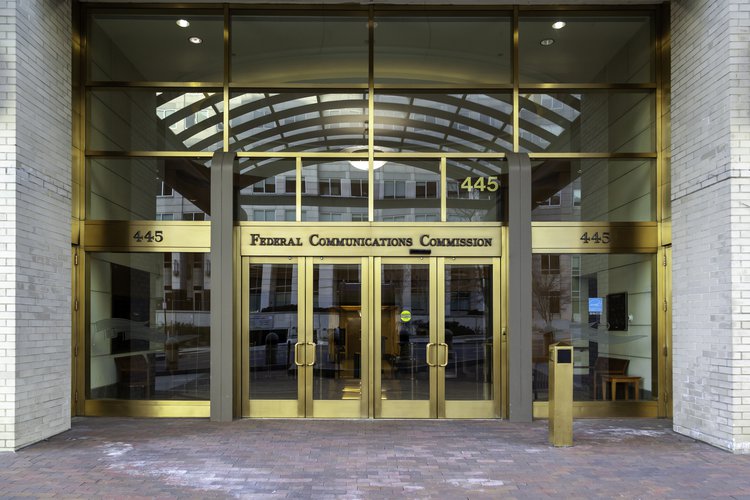
The Federal Communications Commission (FCC) has announced that there will be a vote next month concerning the permission of state and federal prisons and jails to block contraband cellphones. This decision comes as a part of efforts to limit cell phone usage within US prisons, as reported by FCC Chairman Brendan Carr.
The vote will be conducted in the coming month. The image source is Getty Images. The Federal Communications Commission (FCC) announced that within prisons, there are numerous unauthorized cellphones.
The agency emphasized that these connections facilitate inmates to “execute orders, orchestrate violent gang actions, exploit young kids, and support criminal businesses.”. The Federal Communications Commission (FCC) will discuss and vote on an order at its November 19th Open Meeting to adopt rules enabling, but not mandating, state and local correctional facilities to jam contraband cellphones.
The FCC referenced statistics from 2024, indicating that prison authorities seized over 25,173 cell phones in a single year, with two facilities reporting more than 6,000 each. The FCC explained that jamming would only occur within a designated “jamming containment area” where wireless devices are prohibited, and it must not cause harmful interference outside that area.
Additionally, mobile carriers, FirstNet, public safety coordinators, and 911 authorities would receive advance notice of on-site testing, while nearby communities would be informed before deployment. “Over numerous years, a large number of illicit cellphones have entered prisons, and some of the most dangerous criminals have utilized them to orchestrate attacks, plan violent gang activities, and support criminal businesses,” stated Carr. “Although the FCC has approved various solutions, it has not permitted jamming.” Today’s conclusion. We are adopting a bold yet accountable method to enable those in the forefront to make full use of the various options at their disposal, such as disrupting communications, for the initial time.
Further information can be found in Carrier Networks. 27 Aug 2026.