
Utilities and infrastructure investors are increasingly buying operating power plants rather than waiting for new capacity to come online, as AI-fueled data center growth collides with years-long delays to build and connect new generation. With permitting bottlenecks, equipment shortages, and interconnection backlogs pushing out timelines, the market is paying a growing premium for assets that can deliver electricity sooner, according to a new Deloitte report.
Deloitte characterizes this premium as a shift toward “deliverable capacity”: operating generation that can be secured at scale and energized quickly despite tightening reliability, capital, and execution constraints.
“It has become critical because US power demand is rising due to AI-driven digital infrastructure expansion and electrification, while new generation and grid infrastructure remain slow and costly because of permitting delays, interconnection backlogs, supply chain constraints and capital needs,” said Thomas Keefe, vice chair and US Power, Utilities & Renewables leader at Deloitte.
Existing Assets Command a Premium
In 2025, buyers favored acquisition over construction as economics and timing tilted toward operating plants with firm deliverability and established grid interconnections. Deloitte found that US power and utilities announced nearly $142 billion in transactions during 2025, with a pronounced shift toward portfolios of operating generation over greenfield development.
“The rise of AI has been a major catalyst for growth in the power sector,” said Brynna Foley, an investment research analyst covering power and renewables at Enverus. “With demand for power infrastructure this high, capital costs for new generation, gas plants in particular, rose roughly 40% between 2015 and 2025.”
Combined with permitting delays, interconnection backlogs, and supply-chain constraints, those higher costs have made existing assets more attractive to investors.
Valuations reflect the trend. Foley said 2025 transaction multiples were nearly double 2024 levels, even as operating plants in many cases continue to trade below the cost of building comparable new generation. “That creates a kind of ‘buy-to-build’ premium,” she said.
Natural gas has been the centerpiece of that strategy. According to Deloitte, 62 GW of gas-fired generation changed hands in 2025, representing 43% of all generating capacity transacted that year. Gas-sector deals totaled nearly $89 billion across 23 transactions, highlighting investor preference for dispatchable, grid-connected assets with near-term energization.

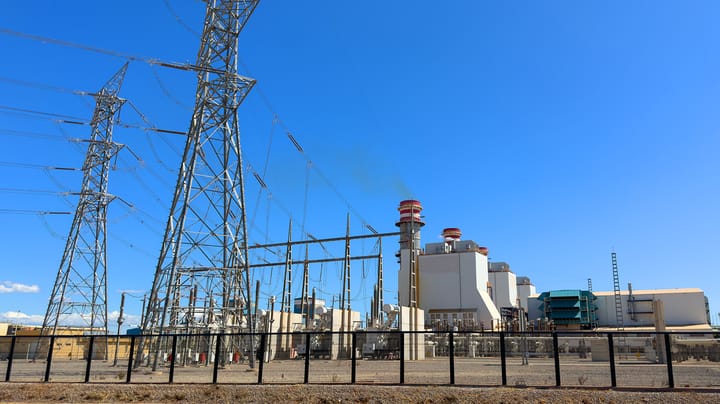
Natural gas has been central to recent transactions, offering dispatchable capacity and faster paths to power than many greenfield projects. (Image: Getty Images)
Speed to Power Is Shaping Strategy
The premium extends well beyond megawatts to the rights and infrastructure that enable rapid energization. “It’s likely a function of all of those things, but data center developers are increasingly favoring time-to-power,” Foley said, referring to generation assets, interconnection rights, transmission access, and speed to energization.
That emphasis is fueling behind-the-meter strategies, in which generation is sited at or adjacent to a facility to reduce reliance on congested grid upgrades, and “bring-your-own-generation” approaches, where developers procure or control dedicated generation to serve new campuses. The goal is to shorten timelines and de-risk schedules for hyperscale deployment.
Throughout 2025, Enverus, an energy AI and decision intelligence platform provider, observed a wave of acquisitions involving independent power producers and private investors, particularly in PJM Interconnection (serving parts of the Mid-Atlantic and Midwest) and the Electric Reliability Council of Texas (ERCOT). More recently, however, transaction activity has slowed.
Foley attributed that slowdown partly to large independent power producers completing major 2025 deals and focusing on balance sheets. She also pointed to a shrinking supply of high-quality, premium portfolios. “We’ve also seen a few highly efficient plants change hands to private buyers, and there are only so many of those high-quality portfolios in the market,” she said.
Even so, Foley expects investors to continue favoring acquisitions while the “buy-to-build” premium persists.
Different Economics For Utilities
Merchant generators and regulated utilities face very different incentives.
Merchants benefit directly when tight markets lift energy margins, capacity values, and contracted cash flows. Regulated utilities, by contrast, earn an authorized return on their rate base; most fuel and energy costs generally pass through to customers, and regulators scrutinize acquisition premiums.
“When a utility buys an existing generator, commissions will often disallow the acquisition premium unless you can show a clear ratepayer benefit,” Foley said.
That dynamic can steer utilities toward transmission, substations, and other grid investments that support reliability and integrate future resources, even as the same AI-driven load growth boosts merchant asset values.
Outlook
Keefe expects ownership to continue concentrating among large, well-capitalized participants. “We are expected to see power ownership continue to concentrate among large, well-capitalized participants that can assemble balanced portfolios delivering capacity with speed, certainty and durable cash flows,” he said.
As AI-driven electricity demand outpaces the pace of new interconnection, existing generation is becoming more valuable not simply because it produces power, but because it can deliver it years sooner.