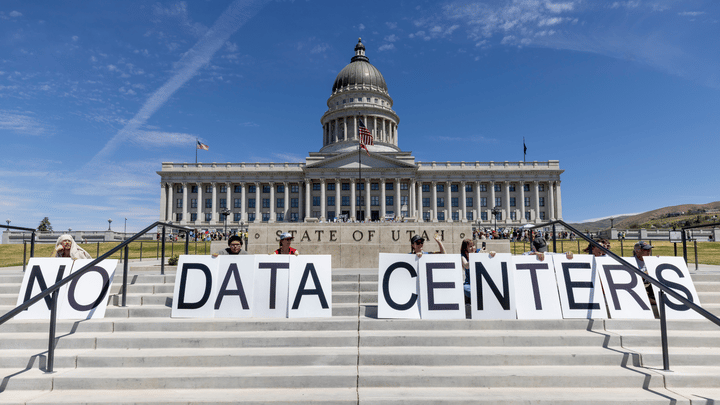
The Upcoming Challenge for Data Centers: Earning Public Trust and a Social License to Operate. A 5-minute read. Protesters gather at the Utah State Capitol on May 23, 2026, in Salt Lake City to demonstrate against the proposed Stratos data center in Box Elder County.
Image courtesy of Natalie Behring/Getty Images. In recent years, the data center sector’s biggest limitations have been physical: power, land, transmission infrastructure, and supply chains. Community sentiment is increasingly becoming just as critical a factor.
In June, voters in Monterey Park, California, approved a ban on new data centers following a heated battle over a proposed facility. In April, residents of Festus, Missouri, who opposed a proposed $203 billion campus, voted out every incumbent council member who was up for reelection.
Different communities, same result: locals are calling for a bigger say in decisions that will have lasting effects on their areas. According to Ihab Osman, an independent strategist focused on data centers and mission-critical infrastructure, a broader trend is unfolding.