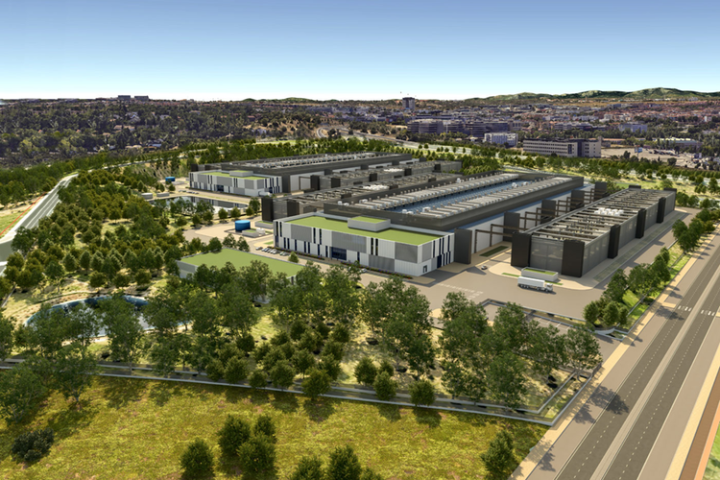

Demand for data centers has skyrocketed, with no signs of slowing down.. Analysis from JLL found that the sector is experiencing an infrastructure investment supercycle that could require up to $3 trillion by 2030.. But as the investments grow, the industry also faces a capacity crisis, centered around the usual power requirements, land availability, water for cooling, and chip scarcity.
And while these physical constraints play a large role in how fast AI infrastructure can scale, there’s another conversation that hasn’t yet reached the mainstream: procurement infrastructure that hasn’t scaled alongside the investment driving it.. Modern data center builds require thousands of custom-engineered parts, ranging from power distribution hardware and liquid cooling assemblies to structural enclosures and cable management systems.
Within those components, each part contains specific material requirements or performance specifications that vary by design, thermal load, and deployment environment.. The organizations tasked with specifying, designing, sourcing, and qualifying custom parts with niche specifications for their data center buildouts, such as liquid cold plates or air-cooled heat sinks that can maintain the growing temperatures within, are operating under systems that made sense in a slow, predictable industry.
But as demand grows even higher, traditional manufacturing processes must quickly evolve to avoid becoming a larger bottleneck for data center development.. How fragmented sourcing becomes a compliance liability. With how fast data center development moves, sometimes a design has already evolved, or the deployment window has narrowed, and an update or tweak to a specific part means the only options are delay or compromise.
The investors and companies relying on those developments won’t be forgiving for long. But beyond just delaying builds, this fragmented sourcing landscape also poses compliance risks that can undo months of progress in a single qualification failure.. Build components are subject to multiple regulatory and program requirements due to the critical nature of AI infrastructure, from BIS export controls on the chips that power data centers to the UFLPA-driven traceability obligations on the steel, aluminum, and electronics that make up the build itself.
And when those components come from dozens of different suppliers across various geographies, each with their own documentation practices, verifying those records becomes another full-time project in itself.. As AI infrastructure scales, this problem compounds. A single facility requires compliance documentation for thousands of line items.
One large-scale operator managing simultaneous builds across multiple regions faces this challenge in parallel, with limited visibility into which suppliers are producing clean documentation and which are not. If a component fails qualification late in the procurement cycle, it creates a domino effect that can set back build timelines by months..
Changing the equation with design standardization. One of the biggest shifts taking place in data center development right now is the move toward design standardization. Operators and original equipment manufacturers (OEMs) are recognizing that custom, site-specific designs introduce the sourcing fragmentation described above, and that the answer is to eliminate the variation at the source..
If a component fails qualification late in the procurement cycle, it creates a domino effect that can set back build timelines by months.. In practice, design standardization entails establishing reusable specifications for components across various builds: a defined, fixed set of approved form factors, material grades, tolerance ranges, and performance thresholds for the categories that typically create fragmented sourcing processes..
Rather than having to re-specify and verify components from scratch for every new facility, standardization allows engineering teams to work from a library of pre-approved designs that have already cleared qualification. From there, procurement teams can work from approved supplier lists and pricing structures that can carry over from project to project instead of being rebuilt each time..
These standardized designs create the conditions for efficient procurement. Approved supplier lists shrink to a manageable set, lead times are predictable, and quality documentation can be templated and replicated rather than being reconstructed with every new build. The organizations that have made the most progress on data center procurement efficiency are typically those that have also made the most progress on design standardization in their manufacturing processes..
From sourcing constraint to catalyst. Closing the gap requires better supplier management. It also requires manufacturing partners and sourcing platforms capable of operating across process types, delivering at scale, and providing compliance documentation that large-scale builds need without falling into bottlenecks along the way..
The data center industry will continue to pour attention and capital into power, land, water, and other physical constraints that currently dominate the conversation. But the organizations building and operating at scale already understand that procurement is also a critical part of developing this infrastructure..
Every week of delay due to a sourcing failure, a compliance gap, or a supplier capacity constraint is another week of AI infrastructure that is unavailable. At the current pace of growth and investment in data centers, these costs pile up quickly, and the industry can no longer afford to ignore procurement when planning its builds..
The industry conversation must expand to include not only what data centers are made of physically, but also how those components are sourced, verified, and delivered. Speed and flexibility have become the driving forces catalyzing today’s data center builds, whether it’s a supplier network that can pre-qualify build components and provide documentation at the time of quote or a partner that can shift a part to an alternate qualified supplier the moment capacity tightens.
Only then can AI infrastructure scale alongside the demand.. More in Construction & Site Selection. 06 Aug 2026.
20 Aug 2026