High-performance computing company Bull has been awarded a €40 million ($45m) contract with DKRZ, the German Climate Computing Center, to deliver the High-performance Computing System for the Earth System Research (HLRE-5) supercomputer.
The system is expected to come online in early 2028, with the contract set to run for five years and include support services.
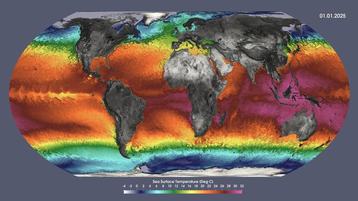
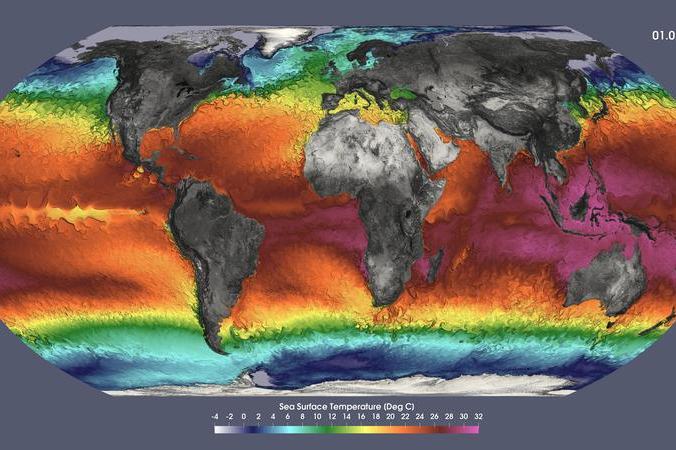
Once live, the HLRE-5 will support both physics-based simulations as well as AI-driven climate research, DKRZ said in a statement, adding that the system will reduce the energy required per simulated year by around 75 percent when compared to the center’s current supercomputer, Levante.
When it comes to HLRE-5, the XH3500-based supercomputer will comprise two partitions, a GPU partition powered by Nvidia GB200 Superchips, and a CPU partition containing Nvidia Vera CPUs, and use direct liquid cooling technology. The nodes will be interconnected by Nvidia Quantum-2 InfiniBand networking, while the storage is IBM Storage Scale System 6000, combining 60PB of high-capacity disk drive storage with up to 340 Gbps throughput and a dedicated 500TB flash tier.
A district heating system will allow DKRZ to use the waste heat from the system to heat the University of Hamburg.
“The new system will allow us to drastically reduce the energy needed for our users’ climate simulations,” said Dr. Hendryk Bockelmann, head of DKRZ’s applications department. “For a center that exists to study the climate, that is not a side benefit – it is part of the job.”
Dr. Martin Matzke, head of Northern and Central Europe, Bull, added: “We are proud to continue our long-standing collaboration with DKRZ, one of Europe’s leading climate computing centers. HLRE-5 builds on years of joint innovation in energy-efficient supercomputing and demonstrates how advanced digital infrastructure can support excellent climate research.”
The contract award comes six months after the French state completed its acquisition of Bull, the former HPC and quantum subsidiary of Atos, following the signing of a €404m ($469m) share purchase agreement between Atos and the French State in July 2025.
Its BullSequana HPC systems form the basis for a number of the world’s most powerful supercomputers, with its X series architecture supporting exascale-class systems, including Europe’s first exascale system, the Jupiter Booster.
In April 2026, Bull revealed it had secured a €30 million ($35m) five-year contract to provide AI-optimized infrastructure at Sweden’s Mimer AI factory, also based on Bull’s BullSequana XH3500 architecture.
Also this year, Bull was selected by the EuroHPC Joint Undertaking (EuroHPC JU) and the Lumi AI factory consortium to deliver the Lumi-AI supercomputer, to be hosted at the CSC data center in Kajaani, Finland, and was separately awarded a €31 million ($36m) contract with the Spanish State Meteorological Agency (AEMET) to deliver supercomputing infrastructure.
More in HPC & Quantum

More in Europe