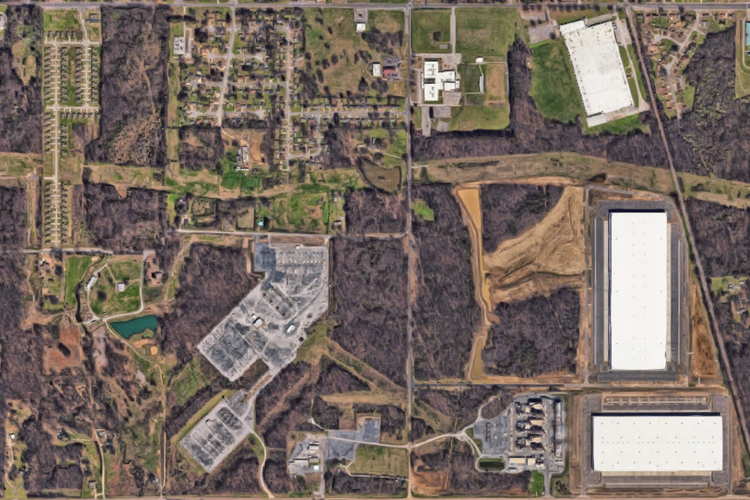
SpaceXAI may have to pay a fine of as much as $6.1 million due to initiating work on its data centers in Mississippi without obtaining the necessary permits. Elon Musk’s company has received a notice from the Mississippi Department of Environmental Quality (MDEQ), claiming that “construction activities took place at the sites before they were covered under Mississippi’s Large Construction Stormwater General Permit.” I data center di xAI si trovano nel Mississippi e possono essere trovati su Google Maps.
Questa è la prima volta che Google impiega questa tecnologia. “MDEQ is looking to impose fines of up to $25,000 each day, with an initial estimated exposure of roughly $6.1 million across three locations.” An SEC filing released yesterday announced that MZX Tech LLC, a subsidiary of SpaceXAI, received a notice for violating federal and state regulations by building and running a gas-fired power plant in Southaven, Mississippi, without obtaining necessary permits. The company confirmed they are working with the MDEQ to resolve the issue through a unified agreed-upon order.
The three locations mentioned are data centers which comprise a cluster constructed by SpaceXAI, now known as SpaceXSI, near Memphis, Tennessee, but they are positioned beyond the state line in Mississippi. Two facilities, named Macrohard and Macroharder, are operational, whereas the other, Minihard, is still being built.
The fourth Memphis location of the company is located within the city. SpaceXAI is preparing for a legal confrontation concerning court turbines. Since SpaceXAI began constructing their data centers in Memphis in 2024, they have frequently been embroiled in controversy.
This week, a judge denied the Department of Justice’s attempt to halt a lawsuit filed by the National Association for the Advancement of Colored People (NAACP). The NAACP claims that SpaceXAI violated federal laws and state regulations by establishing and operating a gas-fired power plant in Southaven, Mississippi, without obtaining the necessary permits.
The US government’s Environmental Protection Agency (EPA), which is responsible for enforcing the Clean Air Act, had sought to close the case.