
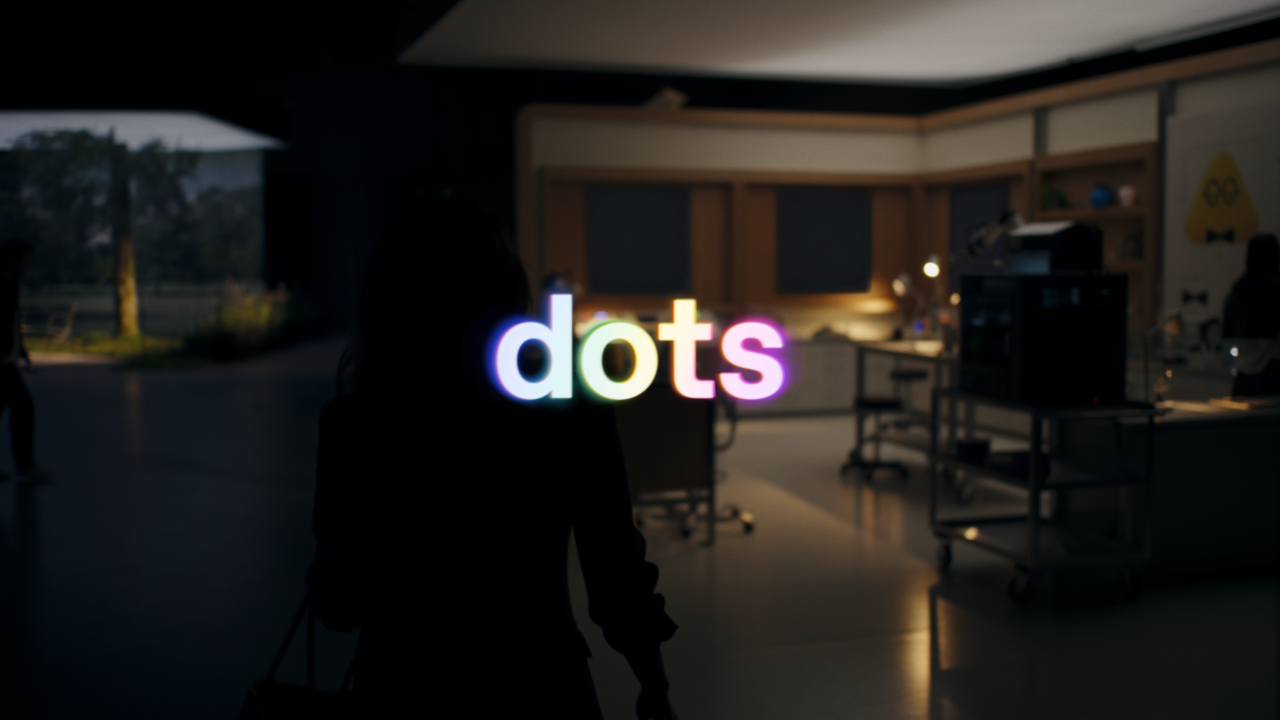

OpenAI on Tuesday unveiled Dots, an always-on artificial intelligence assistant that can work across more than 4,000 apps, alongside a new $500-a-month ChatGPT subscription plan.
Introduced at the company’s developer conference, Dots runs on OpenAI’s GPT-6 Astra model and has its own cloud computer and browser. OpenAI said the assistant can work toward a user’s goals around the clock and learn from feedback.
Users can message or call a dot through ChatGPT on desktop, web and mobile, or message it through Slack and Microsoft Teams. OpenAI said text messaging support is planned for later, and that Dots can report progress, ask questions and keep context across channels.
“It’s like an AI helper that’s always got your back,” Chief Executive Sam Altman said at the event.
Referring to user controls, Altman said: “This allows you to trust your dot with as much responsibility as you’re comfortable with.”
OpenAI said Dots can be used for tasks including monitoring customer feedback, preparing tested software fixes and updating research figures when new data arrives. The company said its own teams use Dots to investigate bugs reported in Slack.
In one early test outside OpenAI, the company said a dot prepared an overdue invoice and sent it after the user approved it.
Dots is starting to roll out to Pro and Business Premium subscribers in eligible markets. Enterprise customers, including education and healthcare organizations, can try a beta version if workspace administrators enable it.
Users will initially receive one dot, with support for more planned later. Users can choose which apps a dot can access and set rules that require approval or block particular actions.
OpenAI said a dot’s background research uses read-only access to connected apps. Users can inspect its work and review actions that could affect their accounts.
The company is also piloting specialist Dots for organizational tasks including procurement, customer support and commercial contracting.
OpenAI’s new Pro 500 plan costs $500 a month and includes what the company said is its highest usage allowance, equal to 25 times the ChatGPT Plus allowance. The plan also includes access to Ultrafast processing for GPT-6 Astra in ChatGPT Work and Codex.
OpenAI said Ultrafast can generate output up to eight times faster in Codex. The company also introduced GPT-6.1 Sol, which it said comes close to Astra’s performance on coding and professional tasks at one-fifth of Astra’s standard API input and output token prices.
Another launch, ChatGPT Space, gives teams a shared workspace for ChatGPT and Dots. OpenAI said ChatGPT has 1.2 billion weekly users.


