
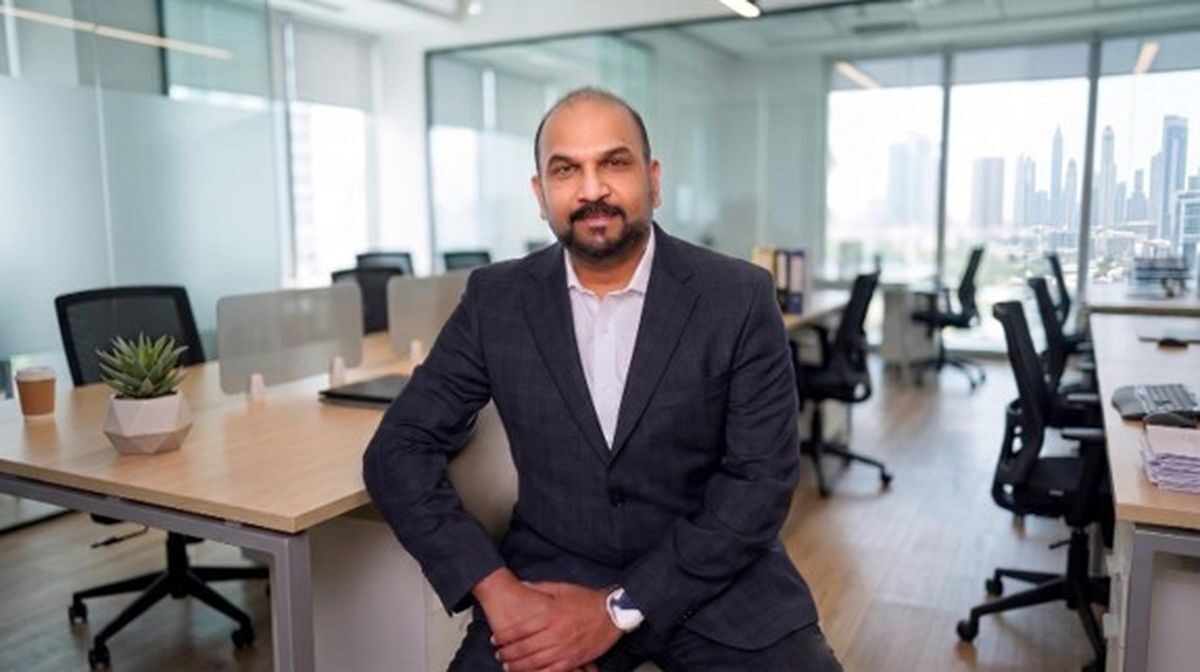
IEEE Senior Member on why resilience, privacy, and cost matter as much as raw performance. AI benchmarks look impressive in the lab, with high accuracy scores and fast processing times. But for Harish Janardhanan, a Software Development Manager at a global e-commerce company and IEEE Senior Member, the real measure of AI’s value shows up somewhere else..
“When you move AI from controlled demonstrations to production environments, where data arrives late, incomplete, or out of order, the picture changes dramatically,” Janardhanan says. “The hard part was never the models themselves. It’s building trust in the underlying data, in human-AI workflows, and in who is accountable for the outcome.”.
Over two decades, Janardhanan has worked across academic research and enterprise engineering. His research, published in IEEE venues and the Journal of Information Systems Engineering and Management, points to a shift: moving away from raw performance and toward systems that are resilient, private, and economically sustainable..
The three pillars of dependable AI. Janardhanan’s work rests on three interconnected pillars. Adaptive Security means systems learn from attacks instead of only reacting to them.
Privacy Preservation means enabling intelligence without centralizing sensitive data. Scalable Autonomy means letting complex systems coordinate themselves in changing, real-world conditions.. Together, the three pillars work as one system: security protects the data, privacy ensures it’s used ethically, and autonomy optimizes how decisions get made..
“These aren’t separate concerns,” Janardhanan explains. “They shift the focus from optimizing for accuracy to making sure the whole system is resilient, compliant, and efficient.”. His 2025 IEEE paper on adaptive cybersecurity showed how organizations, from banks to hospitals, can move from reacting to threats toward defenses that improve over time.
Instead of chasing attackers, his systems learn from each attempted breach, becoming harder to break into.. His work on federated learning, a method where several organizations train one shared AI model without pooling their raw data, addresses privacy directly. Hospitals can train diagnostic AI for rare diseases together by sharing only model updates, not patient records, while staying compliant with HIPAA, the US patient-privacy law, and GDPR, Europe’s data-protection law..
The smart hospital: A blueprint for integrated AI security. In the “Smart Hospital of the Future,” Janardhanan’s design shows these ideas working together. A layer using hierarchical reinforcement learning, or HRL, an AI method that breaks big decisions into smaller, manageable ones, coordinates threat detection, network monitoring, and defensive resource allocation across the hospital’s systems..
Its security analysis relies on retrieval-augmented generation, or RAG, a method that checks answers against a trusted database instead of guessing. This grounds every decision in verified cybersecurity records, known attack patterns, and system logs. A separate layer, the model context protocol, or MCP, then turns those decisions into action: patching vulnerabilities, isolating parts of the network, and starting incident-response plans..
Underneath, a three-stage defense builds up over time. Supervised learning establishes baseline threat recognition. CNN-based anomaly detection, a pattern-recognition method, continuously watches the network for unusual activity.
Reinforcement learning then drives an adaptive response to isolate the threat. Alongside all this, federated learning keeps patient data local, training models without ever moving raw records off the hospital’s own systems.. “What we’re demonstrating,” Janardhanan says, “is that AI can be intelligent, secure, and privacy-compliant at the same time.
The Smart Hospital isn’t a distant future. It’s a blueprint for what’s achievable today.”. The economics of intelligence.
Most AI research focuses only on accuracy. Janardhanan points to a blind spot that threatens enterprise AI adoption: cost. As organizations rush to deploy complex AI systems, many risk running into serious budget problems from uncontrolled usage..
“Economic sustainability is a technical requirement,” Janardhanan says. “A system that is technically strong but burns through its entire budget in a week because of inefficient design is effectively unavailable to your organization.”. He has built architectures that treat resource use as a core performance metric, designing systems that maintain steady, useful performance within strict budget limits, an approach that shapes how engineering leaders plan their own AI rollouts..
A call for system-level thinking. Janardhanan argues that the industry’s biggest failures happen at the system level, not the model level. Researchers optimize for accuracy on clean, static datasets, but real-world data is often messy and arrives out of order.
Most failures happen where a model meets legacy infrastructure it wasn’t built for.. His frameworks aim to close that gap, so AI systems are not just intelligent but dependable. He envisions AI infrastructure that learns from the workloads it supports, managing security, privacy, and scalability on its own, freeing engineers to focus on building rather than firefighting..
“The goal,” he says, “is to make AI systems so dependable that they become a seamless part of how organizations operate. Engineers shouldn’t have to treat security, privacy, or scalability as separate problems. The system should handle it.”.
Awards and recognition. Janardhanan is a Distinguished Fellow of the Soft Computing Research Society, a Raptors Fellow, and an IEEE Senior Member, a distinction reserved for members with significant professional accomplishments. He is a peer reviewer for several IEEE conferences and has received the Apex Award and the International TechXcellence Leadership Award for his work on intelligent, dependable, and cost-aware AI systems..
He recently delivered keynote addresses at the International Conference on Intelligent Computing and Sustainable Technologies (ICST 2026), hosted by the Indian Institute of Technology (IIT) Patna, and the International Conference on Networks, Computing Systems and Data Analytics (ICNCDA-2026), organized by the University of Essex, UK.. His research is available on Google Scholar..
Tags: trends


