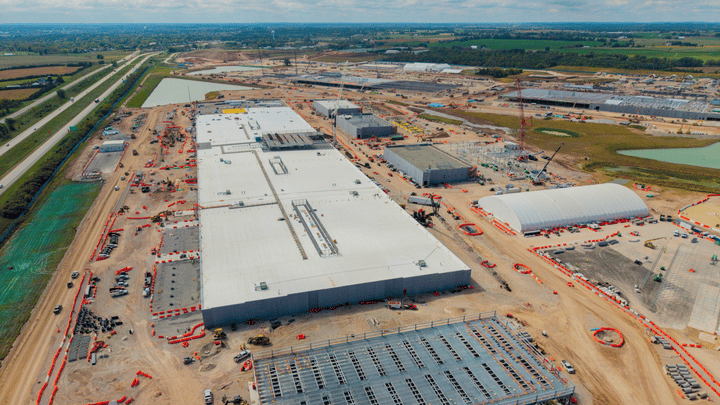
Data center expansion is giving smaller US communities access to major investment opportunities, but it is also testing their ability to support power-intensive developments and secure lasting economic benefits.
For local leaders, the calculation extends beyond the size of a construction budget or a headline investment announcement. Utility capacity, workforce availability, water resources, and the allocation of infrastructure costs can determine whether a project strengthens the local economy or leaves residents carrying expenses that outlast the initial building boom.
A report from the McKinsey Institute for Economic Mobility and Heartland Forward examines these investment-readiness challenges across smaller communities. While the analysis addresses economic development broadly, it emphasizes the infrastructure and institutional capacity required to absorb major investment.
“One of the central findings of our research is that attracting investment and generating lasting economic value are not necessarily the same thing,” Dominic Williams, a report author and senior expert at consulting firm McKinsey, told Data Center Knowledge.
Looking Past the Headline Investment
The report focuses on micropolitan communities with urban cores of 10,000 to 49,999 residents. Its framework assesses economic conditions, community assets and systems, and coordination among economic development institutions.
Williams said smaller communities often have fewer institutions and less redundancy, making infrastructure or workforce gaps particularly consequential when a large project arrives.
“Local leaders should take a comprehensive view of the costs and benefits associated with any potential investment, rather than focusing exclusively on the headline capital expenditure or the number of jobs announced,” he said.
For data center proposals, that means distinguishing construction activity from ongoing employment and considering whether incentives or public infrastructure spending would produce greater benefits elsewhere.
“A large construction project may generate substantial near-term activity but relatively fewer permanent positions once operational,” Williams said.
Power Availability Pushes Development into Smaller Markets
Developers’ search for sites they can bring online is widening the geography of data center investment, according to Sean Farney, vice president of data center strategy at commercial real estate services firm JLL.
“With time-to-revenue driving site selection, the gulf between small and large cities vis-à-vis new development has shrunk considerably,” he told Data Center Knowledge.
Power constraints, community opposition, and market saturation have pushed developers toward alternative locations. Farney pointed to activity in Abilene, Texas, Fort Wayne, Indiana, and Wisconsin’s Lake Michigan corridor.
He argued that communities should account for spending generated by ongoing operations alongside construction and direct employment. Facilities require mechanical, electrical, and plumbing maintenance, as well as security, cleaning, and other services throughout their operating lives.
“The spend just starts with construction,” Farney said.
For local businesses, the opportunity includes securing recurring service contracts. Farney also identified spending on hotels, restaurants, and housing, as well as tax revenue and infrastructure improvements, as components of the economic benefits communities should evaluate.
Measuring What Actually Stays Local
Those opportunities require scrutiny of which benefits will remain in the community, Ruthbea Yesner, group vice president for worldwide public sector at analyst firm IDC, told Data Center Knowledge.
“The deciding factors are power, broadband, and water, not land or tax appetite,” she said.
Communities risk overextending themselves when they accept projects before utilities commit to supply and distribution upgrades required to support them. Water availability and workforce capacity also need to be assessed before development proceeds.
Yesner cautioned against treating construction employment as a permanent expansion of the local jobs base. Workers may need to relocate to find comparable employment after a facility is completed, while direct operating teams can be relatively small.
“My opinion is that small cities often undervalue what they are offering and potentially overvalue what they are receiving,” she said.
Yesner recommended that communities enter negotiations with specific infrastructure priorities in mind. Local leaders should examine opportunities for electrical contractors, HVAC providers, fiber businesses, and other suppliers, while avoiding the assumption that broader industry-wide employment effects will necessarily materialize locally.
Locking in Benefits Beyond the Build
Yesner advised communities to use written infrastructure commitments, public reporting on resource consumption, and protections against stalled projects. Potential safeguards include incentive clawbacks, cost-overrun sharing arrangements, and bonds covering decommissioning and site restoration.
Williams similarly recommended linking incentives to verified investment milestones and establishing developers’ responsibilities for infrastructure upgrades.
“Communities should also consider how infrastructure investments can serve broader local needs rather than being designed exclusively around a single development,” Williams added.
Workforce partnerships can extend the benefits. Developers, community colleges, and local employers can build pathways into electrical, technical, and maintenance occupations, while procurement arrangements can create opportunities for local suppliers.
Those measures give communities a way to connect an individual project with broader development priorities rather than relying on the investment announcement to deliver growth.
“The ultimate measure of success is not simply whether a community attracts a major project, but whether that investment leaves the local economy more competitive, resilient, and better positioned for future growth,” Williams said.