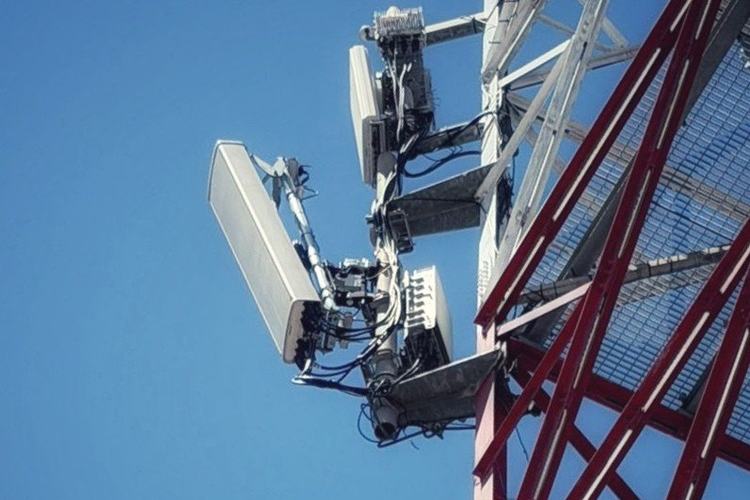
Vodafone is currently trialing a mobile mast that is equipped with what the carrier calls an AI brain and a robotic arm.. The trial, which is taking place in Tirana, Albania, aims to autonomously analyze where customers need coverage most and automatically adjusts the radio antenna to improve the signal.. – Vodafone.
According to Vodafone, the mast is able to evaluate demand and local conditions, such as weather, to determine the strongest signal. For example, during sunny weather, the mast can direct the signal outdoors, and when it rains, it focuses on providing deeper indoor coverage.. Vodafone describes the mast as “self-thinking.” The telco explains that, through an algorithm developed by Vodafone engineers, the AI brain “autonomously directs the robotic arm, manufactured by South Korean firm Humax Networks, to rotate or tilt the radio antenna to optimize 4G/5G coverage and performance.”.
Because of this, Vodafone notes that the mast is able to make its own decisions without human intervention, as it can think, learn, and adapt.. For now, the trial is taking place in Albania’s capital, where it’s overlooking a busy shopping center.. It takes around 20 to 30 minutes for the mast to be moved, although movement can be quicker, though the pace is designed to “conserve energy and is still far faster than the days needed for a manual change or the weeks required to add another antenna,” claims Vodafone..
The reason this trial is of particular interest to Vodafone is that the traditional way of adjusting an antenna requires an engineer to climb a mast. This process can often be met by obstacles such as obtaining planning permission. Being done autonomously presents a use case in itself for carriers looking to save costs and time..
“This is an early example of physical AI in telecoms. By analyzing network demand and making autonomous decisions, the AI algorithm can adjust radio antennas to optimize coverage and capacity without human intervention. This enables us to deliver superior connectivity for our customers,” said Francisco Martin Pignatelli, director of mobile access engineering, Vodafone..
Vodafone adds that the project is part of the company’s wider plans to integrate autonomous antenna control into its company-wide, open standards-based platform for automating radio access network (RAN) components.. The trial builds on Vodafone’s announcement last year that the telco is using satellites to guarantee signal positioning..
More in Carrier Networks. 30 Apr 2026. 19 Jun 2026.
22 Jul 2026. More in Telecoms & 5G. 24 Apr 2026.
02 Apr 2026. 13 May 2026