
The following is a guest article by Matt Doyle, Director of Interoperability, Epic
Every day, patients wait longer than they should for medical care because their providers can’t access images performed at other healthcare organizations. Clinicians often need prior images to support diagnosis, but transferring a previous X-ray or MRI study can take days. When a clinical decision can’t wait, the provider often repeats the scan.
That adds unnecessary cost for patients and the healthcare system, delays care, and exposes patients to radiation they didn’t need.
Through standards-based interoperability, most healthcare organizations already securely share lab results, medications, problem lists, and clinical notes electronically. But radiology images have been left behind. Massive file sizes, siloed imaging applications, and proprietary integrations mean that images still commonly travel between organizations on physical discs.
Sometimes patients serve as the mule to carry discs to provider visits. Once received, staff have manual processes to import and link studies with the correct patient’s chart.
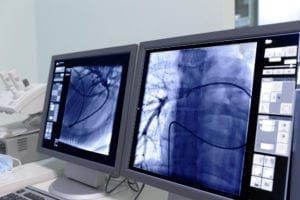
Earlier this year, Epic announced FHIR-based exchange of high-resolution, diagnostic radiology images. Clinicians will be able to see the full details in a DICOM image: from a hairline fracture to a tumor in 3-D.
As it rolls out to the Epic community starting in November, providers using Epic and their patients will be the first to benefit from this standards-based exchange of images. But to truly raise the floor for all Americans, other EHRs, PACS (Picture Archiving and Communication System, a system for capture, storage, sharing and display of medical images), and VNAs (Vendor Neutral Archives, a means of centralized clinical image storage) must adopt open standards to exchange images.
TEFCA, the nationwide interoperability framework overseen by the Office of the National Coordinator for Health Information Technology (ONC), offers a path forward for exchange between providers using different systems. This will allow automation of the labor-intensive manual processes that make sharing diagnostic images burdensome today.
Much of the infrastructure needed to scale image exchange already exists within TEFCA, including a shared directory of healthcare providers, and open, vendor-neutral standards. TEFCA also provides the core functions that image exchange requires: verifying who is requesting a record and why, establishing trust between organizations, and discovering where a patient’s past imaging was performed.
The potential impact is significant. Diagnostic imaging procedures cost the U.S. healthcare system roughly $140 billion to $150 billion per year, a figure projected to reach nearly $240 billion per year by 2032.
Epic Research found that between July 1, 2024, and September 30, 2026, providers using Epic avoided more than 177,000 imaging orders after being notified that an existing study was available on their system. Making it easy to retrieve images held anywhere in the country could multiply that effect.
ONC should prioritize diagnostic image exchange on TEFCA using available industry standards, including engaging with health systems, imaging vendors, and the relevant medical societies to build consensus for the policies and procedures necessary to scale image exchange via TEFCA. The technology and infrastructure are ready.
Patients and providers can’t wait.
Epic is a proud sponsor of Healthcare Scene.