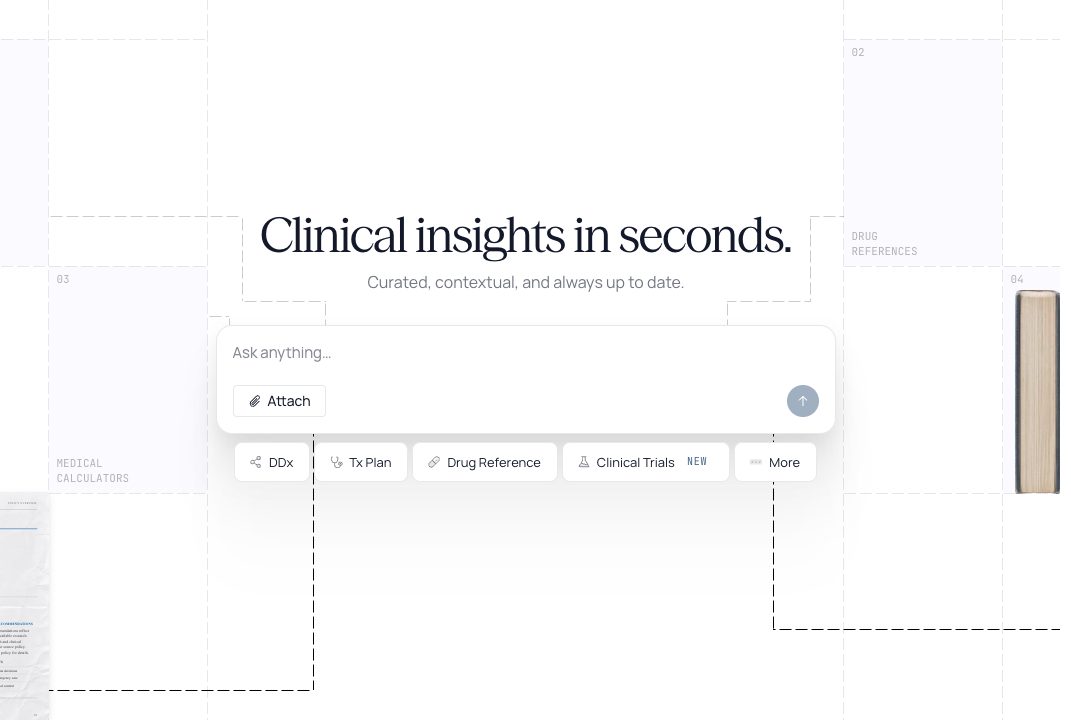
What You Ought to Know. Vera Health, a clinical AI search platform, has completed a $28.5 million Series A funding round, led by Threshold Ventures, with Mantis VC and SV Angel participating. Y Combinator and Gradient increased their initial investments, raising total capitalization to $32 million.
Despite having only 12 employees, the platform has reached over 800,2012 clinicians in 190 countries, primarily due to word-of-mouth. The platform is popular internationally, with 1 in 4 practicing physicians in Spain and Italy, and 1 in 7 in France, using it. The company’s success can be attributed to ‘The Architecture of Truth: Inverting the Generative Paradigm.’ Unlike traditional AI assistants that generate text based on probability and use citations as justification afterward, Vera Health uses an inverse approach: it first retrieves and grades evidence, then writes the answer.
This system features an extensive search engine that indexes over 60 million peer-reviewed biomedical publications, clinical practice guidelines, consensus statements, and FDA/EMA drug labels. Vera’s algorithmic level-of-evidence grading evaluates factors such as study design, sample size, cohort power, publication recency, journal impact factor, and citation velocity, rather than just keyword density or text semantic similarity.
The system also visually represents the strength of supporting evidence for each claim in a clinical summary through dynamically color-coded information. In cases where there is limited data on an orphan disease or a new off-label treatment, Vera highlights the claim with a red flag, notifying the treating physician that the supporting evidence is weak.
As part of its collaboration with the American College of Emergency Physicians (ACEP), Vera integrates official clinical guidelines and decision-making tools into search results at the point of care, ensuring that sources align with medical society standards. This approach is supported by a global team of 12 employees and facilitated through referrals by enthusiastic clinicians across 190 countries.
Vera Health’s growth trajectory deviates from the norm in enterprise healthcare software, as scaling usually necessitates large direct sales teams and extended hospital procurement processes:. Rapid Growth in User Base: A year ago, Vera had only a few thousand active healthcare professionals using its platform.
Today, over 800,000 healthcare professionals from 190 countries use the platform on a daily basis, with hundreds of thousands of queries being processed daily. Global App Store Leadership: Vera has consistently held the top position as the most downloaded clinical mobile app monthly, across both the Apple App Store and Google Play, since June 2026.
During September, Vera Health had more downloads than OpenEvidence and Doximity together. It has gained significant popularity in European healthcare systems, with one in four practicing physicians in Spain and Italy, and one in seven in France. Despite having a small team of twelve employees, Vera has achieved high efficiency by relying on peer-to-peer clinician recommendations for user acquisition.
Co-founder Taieb Bennani believes that clinicians are excellent data scientists.