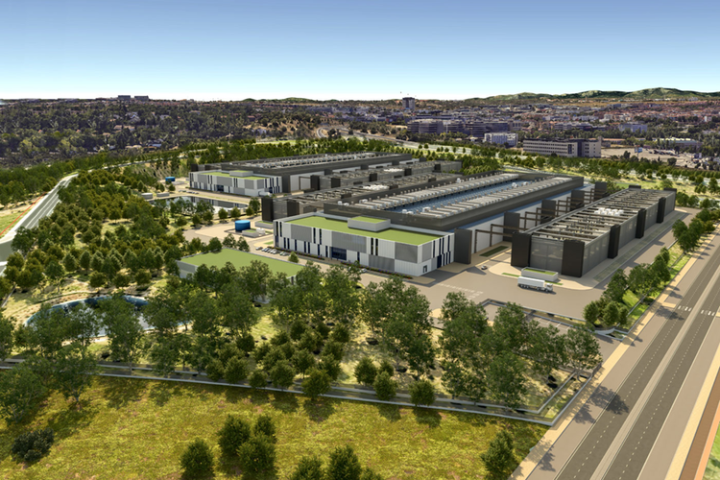

Rapidly growing data demands require operators to scale capacity faster than ever, but traditional concrete construction creates severe bottlenecks. Heavy embodied carbon emissions, lengthy deployment schedules, jobsite material waste, and rigid physical layouts make conventional builds incompatible with aggressive speed-to-market and net-zero targets..
This whitepaper uses a life cycle assessment to demonstrate how shifting from onsite concrete builds to factory-built, prefabricated modular steel structures resolves these challenges. By rethinking structural design, manufacturing, and lifecycle assembly, operators can decarbonize facility shells without compromising performance or scalability..
Download it now to for insights into:. 50% faster deployment: Parallel factory assembly and site prep eliminate weather delays and speed time-to-market. 50%+ carbon reduction: Engineered steel modules cut structural embodied emissions by over half compared to concrete.
3.5x carbon efficiency: Optimized layouts maximize rack density to deliver significantly lower emissions per megawatt. Higher quality, minimal waste: Controlled factory manufacturing ensures strict precision and reduces jobsite waste to under 2%. Future-proof AI readiness: Adaptable modules easily integrate high-density liquid cooling without disruptive retrofits