Two new quantum computers have gone live in Italy.
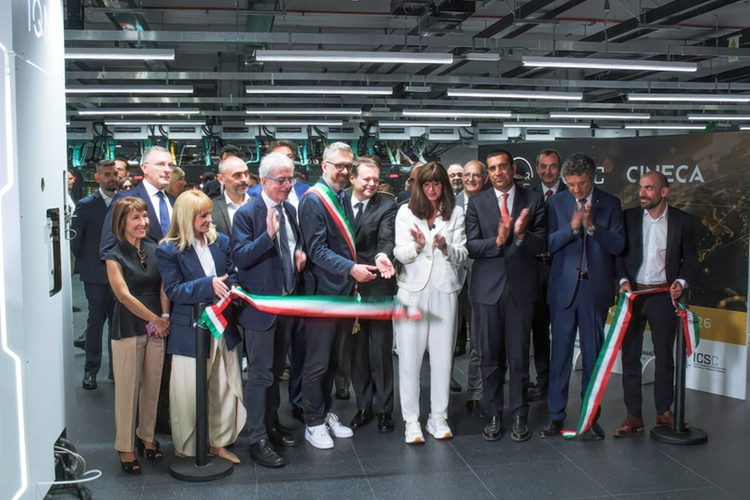
ICSC – the National Research Centre in High Performance Computing, Big Data and Quantum Computing – this month inaugurated the two systems, as well as several other HPC clusters, at the CINECA headquarters of the DAMA Tecnopolo in Bologna.

The Lisa, Gaia, Marco Polo, Nox, and Sol systems were all officially put into operation at the ceremony, attended by Minister of University and Research, Anna Maria Bernini, and other dignitaries.
Developed by Bull, Lisa is an upgrade to the existing Leonardo supercomputer. The system was co-funded by the EuroHPC JU and designed to support the development of next-generation models, from large language models to multimodal AI.
Gaia aims to deliver “HPC cloud on a national scale.” Developed by E4 Computer Engineering, Gaia is the convergence of several programs under the PNRR and the National Complementary Plan (PNC)—from ICSC to TeRABIT, from MEET to GRINS, NBFC, and D34Health. It is set to become Italy’s primary research cloud. The infrastructure consists of 500 servers delivering more than 130,000 CPU cores and 256 GPUs (Nvidia A30, L40s, and H100s).
Marco Polo was developed by Ricca IT and E4 Computer. The system’s partners include the ItaliaMeteo Agency, the National Institute for Astrophysics (INAF), and the Square Kilometre Array (SKA) project. The 17 petaflops system will provide services including operational weather forecasting and large-scale scientific data processing.
Nox and Sol are two quantum computers, the first at CINECA.
The 54-qubit Nox was developed by IQM and funded entirely by the MUR through the ICSC National Center as part of the PNRR. It will integrate with Leonardo for hybrid classical-quantum computation.
Nox, based on IQM’s superconducting Radiance system, is the company’s second quantum computer to be operational in Italy.
“This installation is what Production Quantum means to us. Quantum computers you own, operate, and build value on. Real infrastructure inside real environments, doing real work,” said Sylwia de Weydenthal, Chief Commercial Officer of IQM Quantum Computers. “The delivery of IQM Radiance to CINECA is a milestone for Italy and for European quantum computing. It reinforces our role as a strategic partner in delivering Europe’s HPC–quantum infrastructure on the ground.”
Sol was developed by Pasqal as part of the European EuroHPC program. Based on the French company’s neural atom Orion design, the system totals 140 qubits and will also be integrated with the Leonardo system.
“This inauguration is further proof of Pasqal’s ability to execute at scale and deliver quantum systems where they matter most,” said Wasiq Bokhari, CEO of Pasqal. “Across Europe and beyond, we are turning quantum computing from a research promise into deployed, operational infrastructure that addresses real-world scientific and industrial challenges.”
Francesco Ubertini, ICSC Vice President and CINECA President, said: “With the addition of Sol and Lisa, we are building an integrated Leonardo-centric ecosystem designed to support a wide range of workloads: from advanced AI applications to traditional HPC and emerging quantum computing.”
More in HPC & Quantum

More in Europe