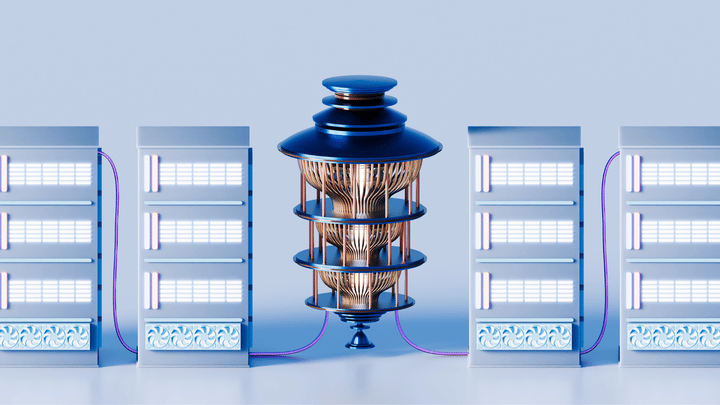
The field of quantum computing is undergoing a transformation. Rather than pursuing the ‘long-term qubit race’ to outperform classical von Neumann architectures, the field currently focuses on closer integration with classical infrastructure. At the forefront of supercomputing facilities, groups are combining quantum processors with GPUs and CPUs to address specific tasks, as governments globally strengthen their backing for quantum technology and logistics.
The charm of quantum computing lies in its distinct non-classical features – superposition and entanglement – which offer novel approaches to depict and handle complex correlations of multiple dimensions, surpassing traditional binary 0/1 systems. The current emphasis is on integrating these properties with existing data center infrastructure.
Quantum Infrastructure Policy Tailwinds. This year, in May, the Department of Commerce unveiled over $2 billion in incentives to expedite the process of turning quantum technology into a commercial product. This includes providing assistance for quantum manufacturing and creating large-scale, fault-tolerant systems.
In June, the White House released an Executive Order titled “The Next Frontier of Quantum Innovation.” The aim is to direct focus on tangible quantum elements, acquiring supplies, and ensuring infrastructure security in the near term. Various governments have implemented comparable projects, indicating that the fusion of quantum and classical computing is a significant focus over multiple years.
In relation to this, the competition between FLOPS and Megawatts in supercomputing by 2026 is noteworthy. Modes of operation and the task of unifying them.