Data Centers Can Delay, Not Dodge, the Power Crunch

3 Min Read
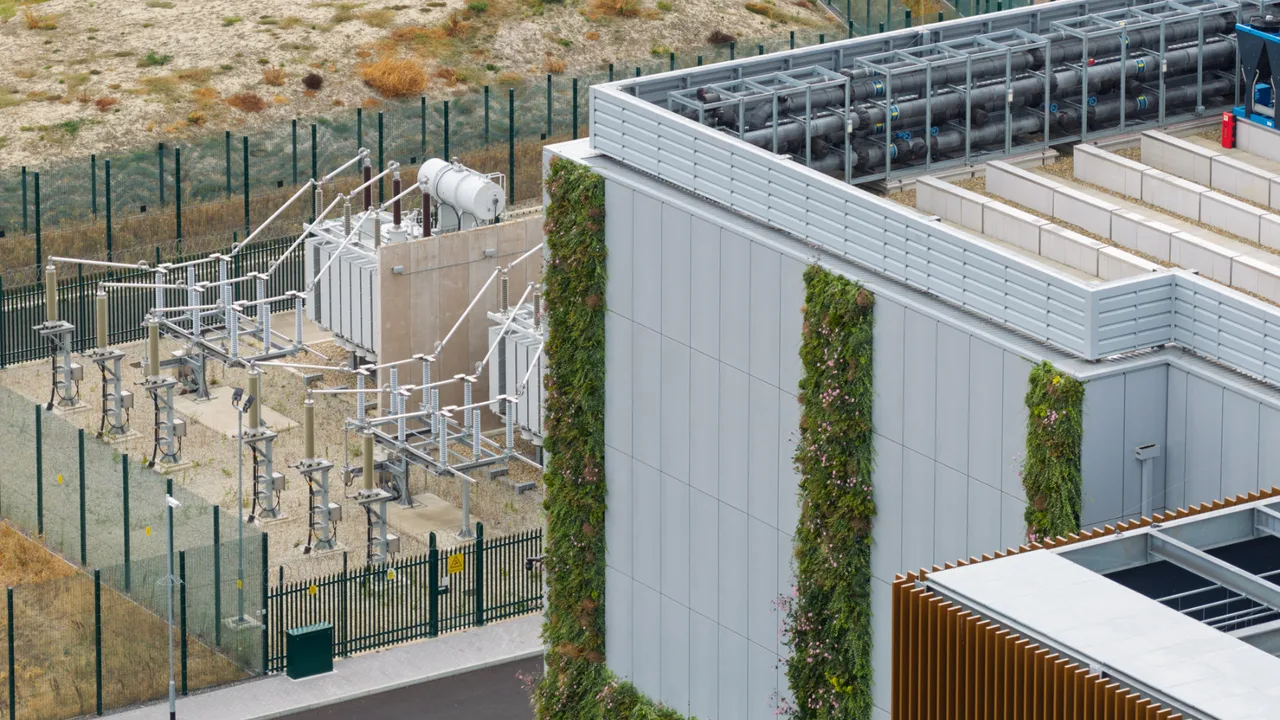
Infosys argues data center operators can create near-term headroom for AI through efficiency gains and flexible workloads, but those measures are more likely to delay than eliminate the need for new generation, transmission, and grid modernization.Getty Images
Data center operators facing power constraints can accommodate more AI computing by improving efficiency and shifting flexible workloads, but those measures are unlikely to remove the need for new electricity infrastructure.
That is the central conclusion of a new Infosys analysis of AI energy demand through 2030. The report argues demand-side measures can deliver usable capacity sooner than new generation, transmission, and grid upgrades. However, it also points to a harder question for developers, utilities, and customers alike: how much of that flexibility is actually available when the grid needs it most?
Mit Majumdar, executive vice president and global head of services, utilities, resources, and energy at Infosys, told Data Center Knowledge that AI-driven energy management, advanced cooling, and peak-load optimization can create meaningful near-term headroom. He did not provide a numerical estimate of additional AI capacity those measures could support.
“However, [these measures] are more likely to delay rather than eliminate the need for new infrastructure,” Majumdar said. “The best path forward is a dual-track strategy: maximize existing capacity while accelerating investment in generation, transmission, and grid modernization.”
Match Power Flexibility to the Right Workloads
The Infosys analysis identifies a mismatch between AI adoption cycles measured in months and energy infrastructure development measured in years. Operators can respond in part by changing when computing occurs, but the amount of flexibility depends on the workload.
“Flexible workloads such as model training, retraining, and batch processing can often be scheduled around grid conditions, while real-time inference and customer-facing applications generally cannot,” Majumdar said.
A facility serving both categories, therefore, cannot assume that its entire AI load is available for curtailment. Operators need to distinguish between work that can wait and applications whose customers require an immediate response.
Customer agreements must also reflect that distinction. Majumdar said broader flexibility will require service-level agreements (SLAs) that match workload requirements, along with demand-response incentives and pricing structures that reward customers for shifting non-urgent computing.
“Greater flexibility will require new commercial models, including workload-aware SLAs, demand-response incentives, and pricing structures that reward customers for shifting non-urgent compute,” he said.
The commercial question extends beyond whether a task can technically run later. Operators need customer commitments that make scheduling changes available when grid conditions require them.
Phase Capacity Around Changing Demand
Efficiency improvements also create uncertainty for developers deciding how much infrastructure to build. AI adoption is increasing computing demand, even as advances in models, chips, and cooling continue to change the power required to deliver that compute.
The report recommends choosing models suited to the task and applying techniques such as quantization, pruning, and knowledge distillation to reduce computational requirements. It also calls for measuring energy use and carbon emissions at the workload level.
Majumdar said developers should respond with staged construction rather than locking in every phase of a project to current assumptions.
“A modular approach allows capacity to scale as demand evolves while preserving flexibility to benefit from advances in AI models, chips, and cooling technologies,” he explained.
That approach gives developers opportunities to adjust later phases as customer requirements and equipment capabilities become clearer. It also keeps efficiency gains in the planning process rather than treating demand growth as the only variable.
“The goal is to avoid both overbuilding and underestimating long-term demand,” Majumdar said.
Prove Load Reductions Before Relying on Them
For utilities considering demand-side savings as support for new data center connections, projections alone are not enough. They need to determine whether operators can deliver reductions under the conditions that matter to grid reliability.
“Utilities should require measurable and verifiable proof, including historical performance, real-time monitoring, and contractual commitments to reduce load when needed,” Majumdar said.
Historical performance can support a claim, while real-time monitoring and enforceable commitments establish how that claim will be tested in operation. Operators and utilities also need to agree in advance on responsibility if the promised flexibility fails to materialize.
Majumdar argued neither party should bear the entire burden.
“Risk should be shared: operators should stand behind performance claims through guarantees, while utilities should establish clear qualification and verification standards to ensure reliability,” he said.
About the Author