Microsoft has terminated its contract for Nscale’s planned AI data center in Loughton, England, after delays to the site’s expected power connection. The cancellation highlights a growing challenge for data center developers: customer demand and financing commitments do not guarantee that electricity will be supplied in time to meet commercial schedules.
For developers, delayed power can leave construction and financing costs running while revenue remains out of reach. For cloud operators, it can mean scrambling for replacement capacity when a planned facility misses its delivery schedule. The risk can be especially acute for neocloud providers, which often depend on a small number of large customers and finance GPU deployments against specific contracts.
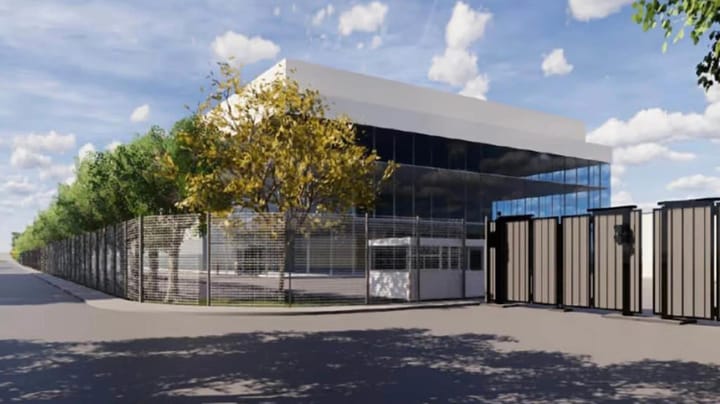
Nscale announced the Loughton project in 2025 as a 50 MW campus that could scale to 90 MW, with plans to deploy 23,040 Nvidia GB300 GPUs for Microsoft Azure. A company spokesperson confirmed that Microsoft terminated the contract.
Nscale remains committed to the site and is exploring alternative power sources as well as other UK expansion opportunities, according to the spokesperson. The company also said the issue does not affect its other contracts with Microsoft and that the broader relationship between the companies remains strong.
The Guardian reported that UK Power Networks told Nscale it could not supply enough electricity for the site until the early to mid-2030s, well after the project’s planned opening. The companies have not disclosed any financial consequences tied to the termination.
“Capacity that isn’t energized generates no revenue, but the costs keep running,” said Alex Cordovil, research director at Dell’Oro Group.
Power Timing Remains a Core Risk
AI infrastructure projects depend on three elements aligning at the same time: a creditworthy customer, financing supported by that customer commitment, and available electricity, Cordovil said. Developers generally have more control over winning customers and arranging financing than they do over the timing of utility power delivery.
Grid operators can revise connection commitments by six months or a year, and in some cases longer, Cordovil said. Permitting processes that depend on third parties can also push projects off schedule.
“The problem isn’t necessarily that AI demand disappears,” said Neil Osnato, founder of Persistence Analytics Group. “It’s that capital can become committed long before the physical and financial assumptions supporting its recovery are proven.”
How severe those consequences become depends on the underlying contracts, including missed-milestone provisions, termination rights, and equipment commitments. Nscale has not publicly detailed how much it spent on the Loughton project, whether any termination payments apply, or what contractual protections were in place.
Neocloud May Be More Exposed Than Hyperscalers
A delayed site can create a larger financial shock for neoclouds than for hyperscalers, Cordovil said. Neoclouds often operate with more concentrated customer bases, higher capital costs, and GPU financing tied to specific deployments.
“A hyperscaler can absorb one delayed site across a large, diversified fleet and balance sheet,” Cordovil said. “A neocloud typically has more concentrated customers and a higher cost of capital.”
If an anchor customer walks away, the provider can be left with equipment and financing structures built around a deployment that no longer has a buyer. A replacement customer may recover part of the investment, but not necessarily the original economics.
“The issue with neoclouds is that the debt and financing is colossal, and the demand they’re betting on is not assured,” said Owen Rogers, senior research director of cloud computing at Uptime Institute Intelligence.
Nscale’s September IPO filing reported $103.4 billion in active and contracted total contract value as of Aug. 31, 2026, compared with $2.6 billion in active contract value. The filing said Microsoft’s agreements with the company provided for payments of up to $43.8 billion through December 2033, subject to delivery and service-availability requirements. Separate agreements with Anthropic provided for up to $44.6 billion.
Nscale also said in the filing that, as of the prospectus date, it had not secured binding financing commitments for the GPU equipment and infrastructure needed to fulfill the Anthropic agreements. The filing does not specify how much financing or equipment spending, if any, was tied specifically to Loughton.
Contracted Capacity Is Not the Same as Operating Capacity
For analysts tracking AI infrastructure build-outs, the Loughton cancellation is a reminder that announced capacity, contracted capacity, and operating capacity are not interchangeable.
“Contracted capacity is meaningless until it’s energized capacity,” Cordovil said.
“Backlog only turns into cash if the neocloud can actually build and power the capacity on time,” Rogers said. He added that customer commitments must remain in place long enough for providers to recover their investments.
Power Delays Can Reshape GPU Economics
Power delays can also compress the window developers have to earn returns on expensive accelerators before newer hardware generations change the economics.
“Nvidia is now releasing new generations roughly every year, so today’s best GPU won’t be top-end for long,” Rogers said. Older hardware can still be used for inference and less demanding workloads, he added.
Osnato said providers can lose money even when their GPUs remain commercially useful. Delayed deployment, lower utilization, or revenue that falls short of financing assumptions can all undermine returns. In some cases, they can force operators to sell hardware or the broader business at a discount.
Gartner has separately warned that heavy AI infrastructure investment could be impaired if projected revenue fails to materialize at the level needed to support the capital committed.
Cordovil said the Loughton project should not be read as a sign that demand for AI infrastructure is weakening. The problem, he said, is that some project schedules still assume grid connection dates utilities may not be able to meet. Behind-the-meter generation can help bridge the gap, but it also introduces additional costs, permitting requirements, and execution risk.
For data center developers and operators, power-delivery schedules are a core project risk. A signed customer contract may prove demand, but it does not guarantee that a facility will be energized in time to begin generating revenue.