
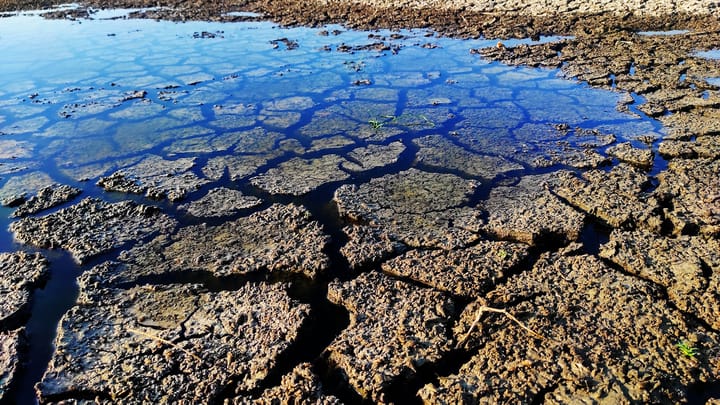
Virginia Report Finds Groundwater Running Dry for Data Centers. 5 Min Read. A Virginia study finds that limited groundwater capacity could reshape data center development east of I-95.Getty Images.
A sweeping Virginia study concludes that no location in the US Coastal Plain could support a major new groundwater withdrawal under the state’s permitting standards, raising new questions for water-intensive data center development east of Interstate 95.. In a 144-page report ordered by the General Assembly, the Virginia Department of Environmental Quality (DEQ) tested whether a hypothetical industrial facility withdrawing three million gallons of groundwater per day could qualify for a permit.
The findings were clear: none of the evaluated regions could support such a withdrawal.. DEQ calculated the maximum groundwater withdrawal each region could sustain while meeting the state’s technical permitting criteria. Results ranged from 360,000 gallons per day in Northumberland County to less than 30,000 gallons per day in Henrico and Sussex counties – much closer to the I-95 corridor, where power, fiber and other infrastructure already support data center development..
Related:Amazon Pushes Virginia to Let AI Data Centers Fund Their Own Grid Upgrades. For operators planning new capacity, the report puts another critical infrastructure variable alongside power and transmission. Because it covers the region containing the world’s largest concentration of data centers, the findings could reshape how developers evaluate water availability, cooling strategies and site selection for future AI campuses..
Asked about the implications for data centers and other large industrial users, DEQ spokesperson Irina Calos said the report “documents groundwater levels insufficient for large industrial water use.” She added that “any such development would need to be reliant on municipal or alternative water supplies.”. While the largest remaining groundwater supplies lie far from Virginia’s established data center markets, DEQ says capacity appears minimal near the Interstate 95 corridor, where development is concentrated..
Most New Withdrawals Fail DEQ Test. Rather than evaluating specific projects, DEQ modeled a hypothetical industrial withdrawal representative of a large, water-intensive facility, such as a hyperscale data center with evaporative cooling. Every modeled three-million-gallon-per-day withdrawal failed the state’s technical permitting evaluation..
Only the eastern Northern Neck approached the scale of a significant industrial withdrawal, with an estimated maximum sustainable withdrawal of 360,000 gallons per day. Near Interstate 95, DEQ estimated sustainable withdrawals below 30,000 gallons per day.. “Under current conditions, the VCP aquifer system has limited capacity for significant new withdrawals,” the report concludes.
It adds that only the highest-capacity locations could support a typical hyperscale data center using evaporative cooling, and those locations are distant from existing clusters of data center development.. Related:Data Centers Under Fire: Do Facilities Need Counter-Drone Defenses?.
Aquifer Recovery Has Already Peaked. The report concludes the aquifers’ decade-long recovery has already ended. Groundwater levels broadly stabilized after the 2010 closure of the Franklin paper mill and subsequent groundwater management actions, peaked around 2021, and are now flattening or declining.
DEQ projects regional declines will resume within five to 10 years if current conditions continue.. Between 2014 and 2017, DEQ cut the combined maximum permitted withdrawals of the region’s 14 largest groundwater users from 146.54 million gallons per day to 73.59 million gallons per day.
Even so, groundwater levels are expected to decline again under current conditions.. Industrial facilities remain the largest groundwater users in eastern Virginia, accounting for 35% of reported and estimated withdrawals across the regulated groundwater management areas. Private domestic wells account for 34%, while public water systems represent 26%.
Paper mills near Franklin and West Point still dominate the region’s groundwater dynamics after decades of pumping altered groundwater flow and increased the risk of land subsidence and localized saltwater intrusion.. Related:EPRI Report: US Data Center Grid Strain Casts Cloud Over AI Race.
The report also warns that population growth will continue adding unpermitted residential groundwater demand through 2050, while chloride concentrations are already rising in portions of Eastern Virginia and the Eastern Shore. DEQ characterized the Ground Water Management Act of 1992 as achieving “mixed results,” concluding groundwater resources east of Interstate 95 remain constrained and are expected to become more limited under current conditions..
Groundwater Becomes a Tougher Option. The findings narrow one development option for data center operators: supplementing municipal water supplies with on-site groundwater wells.. “These facilities actually try to take their own groundwater wells onsite,” Alex de Vries-Gao, a Ph.D. candidate at the Institute for Environmental Studies at Vrije Universiteit Amsterdam and founder of Digiconomist, told Data Center Knowledge.
“This is actually saying, ’Okay, you can’t do that.’”. De Vries-Gao said the findings make municipal water the more likely supply for future projects while narrowing the feasibility of on-site groundwater wells.. Solving One Problem Can Create Another.
De Vries-Gao said the report also highlights why reducing data center water consumption is more complicated than simply replacing evaporative cooling.. Some hyperscalers already distinguish between on-site water use and water embedded in electricity generation. Meta separately reports both, making it one of the few hyperscalers to publicly disclose the two footprints.
In 2024, the company reported 72.2 billion liters of water embedded in purchased electricity alongside its operational water use.. “If you say, for example, ‘Let’s just ban evaporative cooling in data centers because that’s the water-intensive system,’ you could actually be making matters worse in total,” he said.
“You go for these data centers to rely on more power-intensive cooling technologies, which in turn lead to more water being consumed to generate that power.”. Shaolei Ren, associate professor of electrical and computer engineering at the University of California, Riverside, said the report reinforces the point that water is becoming an important consideration for AI infrastructure, though it will not affect every future project, as most data centers rely on municipal water rather than groundwater wells..
“Operators need to consider water and electricity together, because using zero water onsite often means using more power for cooling, especially in the summer when the power grid is more stressed,” Ren told Data Center Knowledge. “It makes sense to look at the full water footprint, including the water used to generate electricity, not just what is consumed at the data center itself.”. “The best path is probably a mix of more efficient cooling, greater use of reclaimed water, less water-intensive power, and smarter siting based on local water conditions,” he said..
About the Author