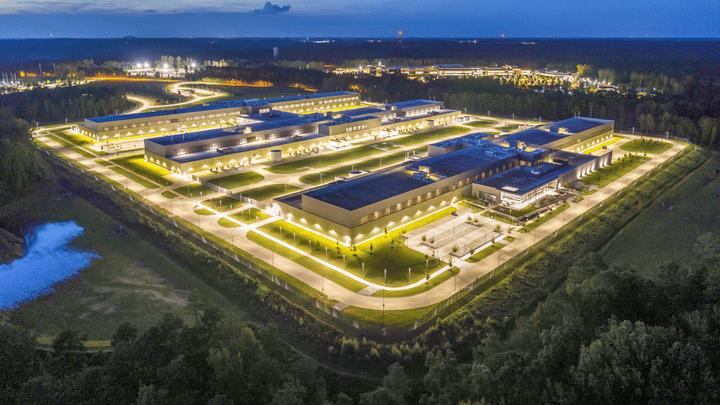

Most data centers are large, standalone buildings surrounded by open space. But there’s another type that receives less attention yet can be equally important to businesses: the urban data center.. For organizations that require a local IT presence in densely populated areas, urban data centers are critical.
This article explores the role these city-center hubs play in the data center ecosystem, their advantages and trade-offs, ideal use cases, and how to find a provider.. What Is an Urban (City-Center) Data Center?. An urban data center is a facility located within a metropolitan core, typically in or near dense downtown districts of cities with populations in the hundreds of thousands or millions.
These facilities are characterized by proximity to major population centers and, often, to dense network interconnection points.. Prominent examples include DataBank’s presence at 60 Hudson Street in Manhattan; Digital Realty’s data center at 365 Main Street near San Francisco’s financial district; the Westin Building Exchange in Seattle, which houses multiple colocation data center providers; the massive data center hub at 350 East Cermak in Chicago; One Wilshire in Los Angeles, home to CoreSite LA1 and other data centers; and Equinix MI1 (Network Access Point of the Americas) in downtown Miami.
In Europe, notable urban hubs include Telehouse Docklands in London and Digital Realty’s (Interxion) campuses in Frankfurt, Amsterdam, and Paris.. Related:Urban vs. Rural: Why Data Centers Are Built Where They Are.
Urban facilities may be standalone buildings or housed within office towers and other mixed-use structures – a design choice often driven by the space constraints of city environments.. Why Choose a City-Center Facility?. Dense urban areas aren’t ideal on every measure.
Real estate costs are higher than in outlying districts, and urban facilities are typically smaller – often supporting 10 MW or less, compared to the 100+ MW capacity of hyperscale data centers outside cities.. However, urban data centers offer compelling advantages that outlying facilities often cannot match:.
Latency and performance. Physical proximity to large urban user bases reduces data round-trip time and jitter, supporting latency-sensitive workloads such as trading, gaming, ad tech, and real-time analytics.. Interconnection density.
City centers feature extensive fiber-optic infrastructure. Access to multiple networks, cross-connect options, and IX fabrics can cut transit costs, boost resiliency, and improve performance.. Operational access: Urban locations simplify site visits for customer teams and third-party technicians – especially valuable for colocation environments with frequent moves, adds, and changes..
Related:Do We Really Need Mega Next-Gen Data Center Campuses?. Urban Trade-Offs: Cost, Space, Power, and Retrofits. While urban data centers solve certain problems, they also present distinct challenges..
Higher total cost. Beyond expensive real estate, urban builds face higher taxes, permitting costs, and security requirements.. Space and power constraints.
Limited footprints can complicate on-site generation and fuel storage, increasing vulnerability to power outages and complicating behind-the-meter power strategies. Emissions rules and noise ordinances may limit generator runtime or type.. Retrofit complexity.
Converting older buildings into data centers introduces challenges related to floor loading, elevator and loading dock access, MEP distribution, fire suppression, and more.. Who Should Choose a City-Center Facility?. Urban data centers are ideal for organizations that prioritize ultra-low latency, rich interconnection, and high-throughput connectivity within a specific metro area.
These may include:. Financial services and high-frequency trading.. Media, gaming, and streaming providers..
SaaS and ad tech platforms.. Telco and Multi-access Edge Computing (MEC) deployments.. Enterprises with stringent data residency needs..
Related:AI Inference Pulls Infrastructure Back into Metro Data Centers. Organizations seeking maximum IT capacity per dollar, or those serving users and endpoints across large geographic areas, may be better served by suburban or regional campuses.. Build vs.
Colocate in the Urban Core. Businesses have two primary paths:. Build your own.
Constructing a data center in a city core is possible but complex and capital-intensive, typically taking years and requiring deep local expertise in permitting, structural engineering, and utility coordination.. Rent colocation space. Partnering with an operator of urban facilities offers faster time-to-value and greater flexibility.
Major colocation providers like Digital Realty and Equinix operate in numerous global metros. Other providers with notable city-center footprints include CoreSite, Telehouse, DataBank, and regional specialists in markets across North America and Europe.. Factors to consider when evaluating operators for urban deployments include interconnection options, cross-connect pricing and SLAs, power availability and density per rack, redundancy architecture, generator and fuel constraints, physical security features, sustainability programs, and logistics..
Is a City-Center Data Center Right for Your Workloads?. Urban data centers cost more to build and operate, and they impose design and operational constraints. Yet, for workloads that depend on proximity to dense user populations and carrier ecosystems in city cores, their performance and interconnection advantages are hard to beat.