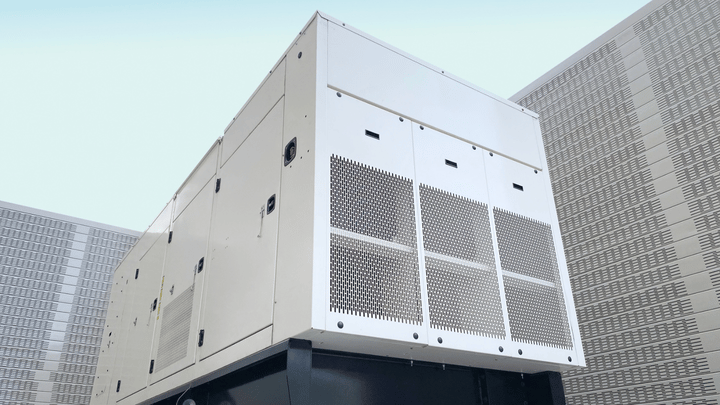
Low-Frequency Noise and Data Centers: What to Know. 3 Min Read. Standby generators are major low-frequency contributors.
Tuned silencers and limiting runtime to daytime tests reduce community exposure.Getty Images. Most of the noise that frustrates neighbors around data centers is audible. But one important factor isn’t: infrasound – low-frequency acoustic energy that most people can’t actually hear, yet may perceive as pressure changes, vibrations, or even building rattle.
As communities scrutinize new projects, understanding what infrasound is, where it comes from, and how to control it is increasingly important.. What Is Infrasound?. Infrasound refers to acoustic energy typically below 20 Hz, which sits beneath the usual range of human hearing.
Although it’s often inaudible, people can sometimes sense infrasound indirectly – as subtle body pressure, vibration in nearby structures, or resonance that causes doors, windows, or fittings to buzz.. Where Infrasound Comes From in Data Centers. Infrasound arises from both natural and human-made sources.
Ocean waves, storms, and seismic activity all produce low-frequency energy. In data centers, several systems can contribute:. Related:Delivery Certainty Will Define the Next Phase of Data Center Growth.
Cooling towersand large axial fans can emit low-frequency sound waves that propagate beyond the site, especially under certain wind or atmospheric conditions.. Standby generators – through engines, exhaust systems, and enclosures – are common sources of low-frequency noise and infrasound during testing or outages..
Server fans primarily contribute mid- to high-frequency noise; however, in aggregate, they can also contribute to low-frequency hum through airflow paths and structural resonance. They are typically secondary sources compared to cooling plants and generators.. Why Low-Frequency Noise Matters.
Most people can’t hear infrasound, and many ordinances address only audible sound. For these reasons, one might think that the data center industry has little reason to be concerned about high levels of infrasound.. In reality, infrasound is increasingly part of debates about the impact of data centers on local communities, with residents complaining that low-frequency noise and infrasound produce headaches, nausea, anxiety, and other health problems..
So far, most of these claims have not been fully validated. Measuring infrasound accurately requires specialized equipment, and few communities have conducted the assessments necessary to prove infrasound at high levels – let alone to prove that data centers are the source of the sound or that it’s causing health problems..
Practical Ways to Reduce Infrasound. Data center operators aiming to stay in the good graces of local communities (not to mention politicians and regulators) would do well to invest in strategies for mitigating infrasound emissions from their facilities, whether real or perceived.
Many options are practical and not especially costly:. Related:The AI Data Center Boom Is Here. Can Contractor Safety Keep Pace?.
Regularly clean fans and other mechanical components. Keeping blades and heat exchange surfaces clean helps equipment run smoothly and can reduce low-frequency noise and infrasound generation.. Install larger fans operating at lower speeds where feasible.
Larger-diameter fans running at lower speeds can produce less low-frequency energy than smaller fans at higher RPM for equivalent airflow.. Use anti-vibration pads and proper isolation mounts to decouple infrasound-producing equipment from floors, walls, and other structural components.
Low-frequency energy travels efficiently through solids, so preventing direct contact can significantly reduce transmission.. Optimize enclosures, mufflers, and silencers. Properly sealed and tuned enclosures around generators and large fans reduce low-frequency output during operations and testing..
Minimize generator runtime. Rely on the grid for normal operations, schedule tests during daytime windows, and consider battery energy storage to reduce generator use.. Consider active noise control in constrained paths.
It can help in specific, controlled scenarios, but is rarely practical at a facility scale or in open-air environments, especially at very low frequencies. Prioritize source control and isolation first.. Evaluate alternative cooling approaches.
Liquid cooling can reduce reliance on high airflow and the associated fan noise, but pumps and related components should be mounted and isolated to avoid introducing new low-frequency paths.. Related:California Judge Orders Full Environmental Review of 330 MW Data Center. Engaging the Community with Data and Transparency.
Beyond engineering controls, measurement and communication matter. Operators will likely win more hearts and minds if they have an open conversation about low-frequency noise and infrasound – including what’s been measured and what’s being done – rather than suggesting that the issue lies solely in neighbors’ heads..
About the Author