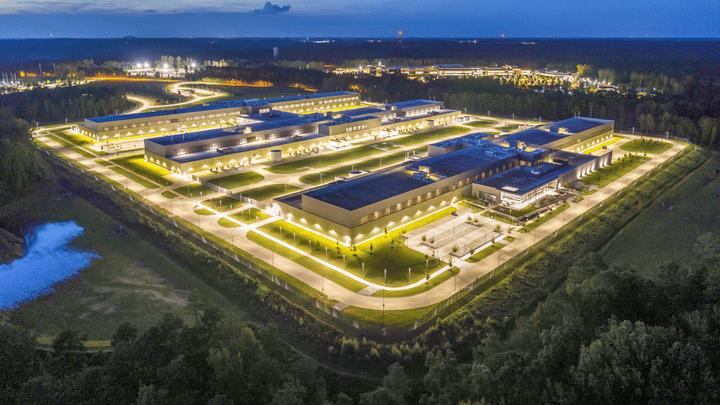

Constant change and new levels of risk are just two factors defining today’s high-stakes data center landscape. But while AI-driven workloads, rising power densities, and increasingly complex infrastructure create uncertainty, the need for reliable, always-on operations has never been greater..
Resilient design principles are already well established at the component level, with redundancy forming a fundamental part of data center strategy. But as facilities become more complex and increasingly global in scale, resilience must extend beyond design and towards execution – implemented consistently and predictably throughout the entire lifecycle of a facility..
“For a long time, we’ve ensured facilities have sufficient power and redundancy in the equipment, but now we’re focusing more closely on the executional part of the equation,” explains Michelle Meeder, director of global accounts data center execution at FläktGroup, a Samsung company.. “As we become more AI-driven, power demands are becoming increasingly complex and so execution resilience is now a global priority.”.
No matter the region or operating model, mission-critical infrastructure must perform safely and predictably, without variations in execution undermining the resilience built into the original design.. This pressure cooker is forcing a new approach where execution resilience sits at the heart of project and operational strategy Michelle Meeder, FläktGroup.
Meeder unpacks how rising complexity inside data centers and across the industry is driving the necessity for an integrated approach that embeds execution resilience from the outset to ensure data center design, equipment, and long-term operations work together as intended.. Keeping cool under pressure with a holistic approach to execution.
AI-driven complexity and greater power demands have already reshaped data center cooling significantly. As densities increase, operators are moving beyond purely air-cooled systems towards complex combinations of air and water cooling, creating increasingly sophisticated environmental control requirements..
At the same time, tighter construction timelines and resource scarcity are placing additional pressure on the delivery of these systems. The result is a growing need to treat cooling as part of an integrated infrastructure strategy rather than an isolated component.. “Operators need greater control over these critical systems,” adds Meeder.
“Not just of the individual components, but their impact across the entire data center. That means looking at cooling as a tightly integrated system, intrinsic to the infrastructure and wider operations.”. As operators look to deliver more capacity across tight timelines and constrained supply chains, managing multiple technologies and suppliers while maintaining reliability requires a more holistic approach to execution..
“This pressure cooker is forcing a new approach where execution resilience sits at the heart of project and operational strategy,” says Meeder.. System-level thinking – from design to execution. This holistic approach extends beyond the integration of cooling and environmental systems.
As the data center ecosystem becomes more interconnected, key functions across the chain cannot work in isolation.. “Demands are getting bigger,” says Meeder. “And so the way we design and supply equipment has changed.
But amid this change, safety and reliability cannot fall away. We have to work together across the supply chain to ensure these principles remain intact despite rising complexity.”. For FläktGroup, this means taking an end-to-end approach to design and execution, with clear ownership and involvement throughout the process..
“We’re already heavily involved in the design process, meaning each of us has clear ownership over what we’re doing,” explains Meeder. “We make sure that we have strict procedures and that, as a team, we can verify the complete system. It’s the whole solution that we provide as a company.”.
Crucially, this solution extends beyond the equipment. Environmental conditions, power availability, water quality, filtration, and control systems all influence how effectively critical infrastructure performs.. “The equipment isn’t the sole priority.
It’s the whole entourage around it,” says Meeder.. Performance and sustainability interconnected. Alongside resilience, the wider data center ecosystem is under increasing pressure to improve sustainability without compromising uptime or performance.
Once considered conflicting objectives, performance and sustainability have become twin priorities.. “They can’t be at odds with one another because sustainability and resilience come together,” explains Meeder. “If you do not have a resilient solution or commissioning process, it will not be sustainable.”.
Compressed project timelines, however, can make this balance more difficult to achieve. Critical components and complex infrastructure must now be designed and delivered at pace, squeezing valuable commissioning and testing periods.. “Commissioning and testing times are getting faster and faster,” says Meeder.
“However, this is one of the most important steps. It demonstrates that what we intend to build is actually going to operate safely and efficiently over its lifecycle.”. As more global players enter the data center construction ecosystem, ensuring that everyone involved understands the complex requirements of this critical infrastructure is becoming another important part of the resilience equation..
“More companies are thinking, ‘We do construction, we can get in on this market as well,’” says Meeder. “But there are so many intricacies that come with getting a critical system operational. They don’t have the knowledge, and they don’t know the processes and procedures around it.”.
Addressing this requires greater education and knowledge sharing across the industry. Rising pressure to deliver at breakneck speed cannot come at the expense of the processes required to secure long-term reliability. Here, global recognition of the value of execution resilience is increasingly critical..
The value of environmental controls for facility-wide visibility. When it comes to data center resilience, it’s easy to think solely in terms of familiar cybersecurity and power redundancy strategies. Yet the environmental conditions inside facilities are equally important to maintaining reliable operations..
“It can be easy to forget that a data center is about more than just power,” says Meeder. “Temperature, air quality, and ventilation all need to be considered as part of the wider integrated system, rather than addressed independently.”. Environmental conditions can influence the performance and longevity of systems, making it essential that these factors are incorporated into the design, tested during commissioning, and validated before facilities become operational..
As digital technologies such as AI, automation, and real-time monitoring increasingly influence how critical infrastructure is designed and operated, environmental control is also becoming more closely connected to digital building management.. FläktGroup’s integration into Samsung is expected to strengthen this particular opportunity, combining the company’s HVAC and critical air supply expertise with Samsung’s global footprint and digital capabilities..
By connecting environmental controls with wider building management systems, operators could gain greater visibility and control across the facility.. “Partnering up with Samsung has given us access to the R&D that they have and also supply chain resilience thanks to its reach,” says Meeder.
“It means we can work towards implementing more smart systems that underpin end-to-end resilience across the data center.”. – Getty Images. Lessons learned from neighboring sectors. While existing standards – such as ANSI/TIA-942 – and established best practices provide an important foundation for resilient data center design, Meeder argues that simply meeting these individual requirements in isolation doesn’t automatically equal a resilient data center..
“To achieve genuine operational resilience, we need to come together globally as an industry because it can’t be done by any one company via disparate localized or regional standards,” reiterates Meeder. “We need to look at setting a global standard together with key players across the ecosystem.”.
To identify the best route to resilience, lessons can be drawn from other critical industries where operational processes have been developed around the consequences of failure.. With a background in the offshore industry, Meeder sees parallels between these environments and data centers:.
“What I’ve learned from offshore environments is that an issue cannot just be looked at as an isolated, standalone problem,” she explains. “Even if it’s small, it can quickly bring about bigger consequences because of the integrated system.”. This mindset places greater emphasis on processes, procedures, accountability, and clear ownership – principles that can also be applied to modern data center operations..
By applying lessons from other critical environments and combining them with greater collaboration across the data center supply chain, operators can begin to establish more consistent approaches to execution resilience.. As data centers become larger and denser, resilience should not be treated as a characteristic of individual components or something to be addressed once facilities are up and running.
It must extend across the entire lifecycle, from the earliest stages of design and equipment selection through to commissioning, testing, and day-to-day operations.. For Meeder and FläktGroup, this shift will be central to navigating the next phase of data center development. In an increasingly pressured and global market, achieving consistent performance will depend on bringing the entire ecosystem together around the same objective..
Explore how FläktGroup helps data center operators build reliable, efficient, and future-ready facilities at https://www.flaktgroup.com/en/solutions/data-centre-cooling-solutions/